Planning a layover in China and wondering how to book a free transit hotel with China Eastern? This airline offers an amazing perk for its passengers: a free transit hotel during your stopover in Shanghai! The guide below will walk you through the process step by step — how to book the hotel, what to watch out for, and how to get from the airport to your room.
Congrats in advance on another unforgettable travel experience! And if you've already checked out my previous article on how to prepare for the trip, you're basically a pro by now. Now it's time for the next step — reserving your free hotel during your layover!
Your free Shanghai layover, sorted
Grab the printable checklist for China Eastern's free transit hotel: who's eligible, which apps to set up, what to expect at the airport, and the entry forms to fill in. Straight to your inbox.
You can unsubscribe anytime.
Who is eligible for a free transit hotel with China Eastern?
The first condition is to have a ticket with China Eastern Airlines, whose main hub is in Shanghai. China Eastern is a member of the SkyTeam alliance, which may also allow you to earn and redeem miles with partner airlines.
The official conditions are as follows: your ticket must be issued directly by China Eastern (the ticket number starts with 781), every segment of your journey is operated by China Eastern (MU) or Shanghai Airlines (FM), and your layover lasts 6 to 24 hours. You also need to apply no later than 12 hours before your first flight departs — but don't leave it to the last minute. Hotels are assigned based on availability, so the earlier you apply, the better your chances of getting one.
The free hotel is a standard twin room, and there's a good chance you'll share it with someone. If the hotel runs out of rooms, it puts two same-gender travelers together, one person per bed. If you want to be sure you'll have the room to yourself, you can pay the single-room difference — at reception or when you book the hotel.
The free package includes one night in a standard room, shuttle transport between the airport and the hotel, and usually a buffet breakfast. This article focuses mainly on Shanghai, where most travelers connect, but you can also apply for a transit hotel when connecting in Beijing, Kunming, Nanjing, Wuxi or Xi'an — you'll find Zuzka's experience from Kunming among the traveler reports at the end of this article.
Take a look at your ticket and find the booking class letter. If you see a "Z", unfortunately, you're not eligible for a transit hotel. If there's no "Z", then you most likely are eligible — and you're ready for the next step.
Sometimes the airline won't have a hotel for you and gives you free airport lounge access instead — which is no bad thing at all: the lounge has free food, drinks and showers.
Accommodation provided
You won't really get to choose the hotel yourself — the airline simply assigns you one. But when the hotel is free, why be picky about the number of stars, right?
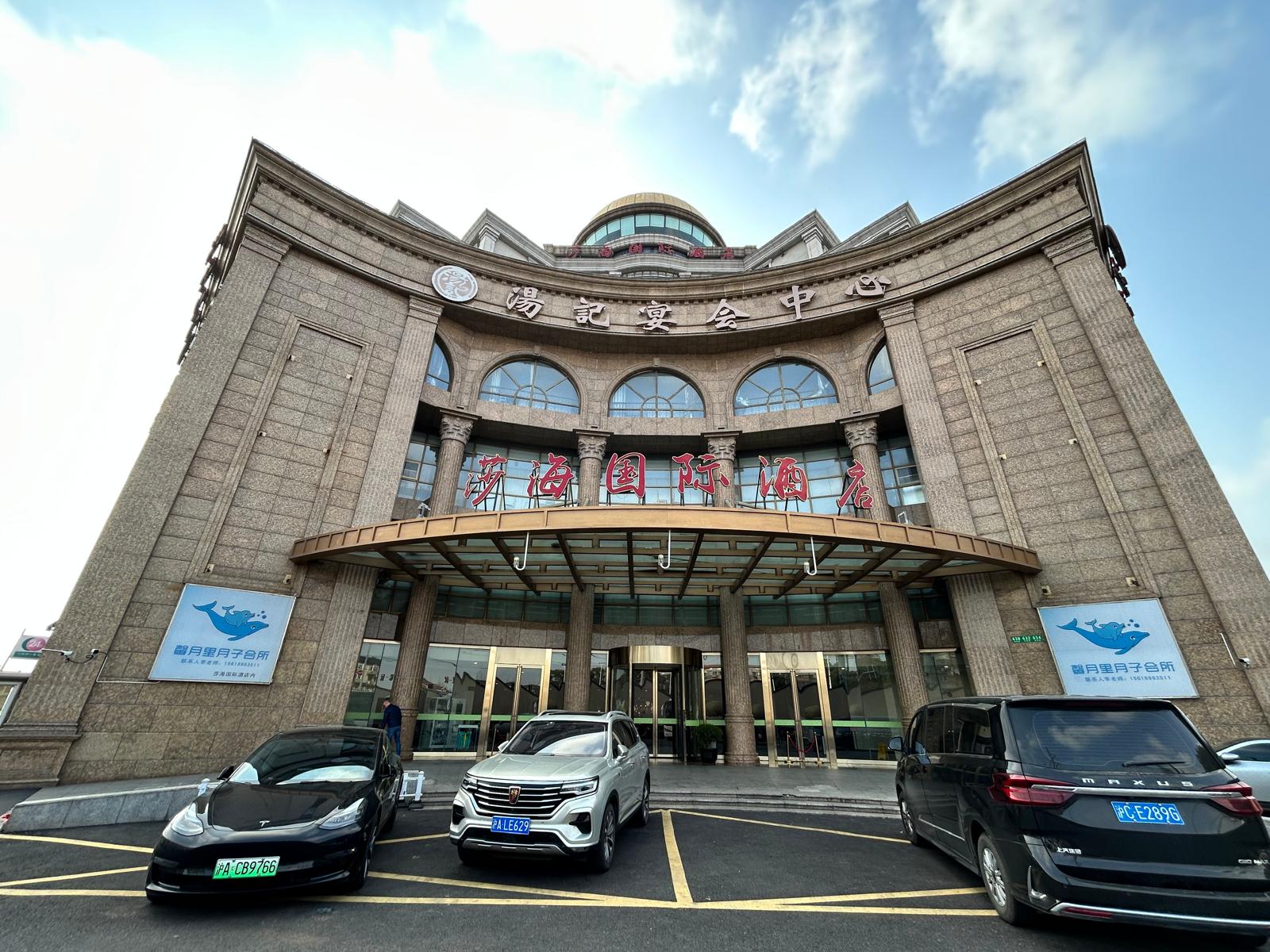
So far, the hotels I know China Eastern has assigned to passengers in Shanghai include: Shanghai Shahai International Hotel, Hotel Shanghai Linzhen, Primus Hotel Shanghai Sanjiagang and Ramada Shanghai Pudong International Airport East Station.
Personally, I always selected non-smoking and quiet rooms — so it's possible that if you skip ticking those options, you might end up with a more adventurous experience.
How to book the hotel
To book your hotel, follow the step-by-step video guide below. First, you'll need to install the China Eastern app. The hotel booking feature is available only in the Chinese version of the app.
At the end of the process, you'll receive a QR code — take a screenshot and save it. Later, if you translate the image using Google Translate, you'll find out which hotel you've been assigned to.
Booking should now reportedly work in the English version of the app too
According to recent reports, you should now be able to book the hotel without the Chinese version of the app, supposedly like this (if you can't find the Transit Hotel icon in your app, though, stick with the method from the video above):
- Download the official China Eastern app (App Store / Google Play) and switch the language to English.
- Create an Eastern Miles account using your email (or a phone number including the country code) and log in.
- In the "My Trips" or "Booking" section, enter your ticket number (starting with 781) or your 6-character PNR code, along with your name exactly as it appears in your passport.
- Go to "Service Selection" and tap the "Transit Hotel" icon — the system will automatically check your eligibility. Click Apply and submit.
- Within 24–48 hours, the app will show "Successful" and your assigned hotel (e.g. Shahai or Ramada). A confirmation page with a QR code will appear — screenshot it right away.
How to get to the hotel
According to the airline, passengers are expected to arrange their own transportation to the hotel. But in practice? That's not always the case.
At the airport (this might happen after you exit the plane, while you're in the visa queue, or nearby), someone from the airline is usually waiting with a sign bearing your name and some basic hotel info. They'll guide you through the process and lead you to a shuttle bus or hotel taxi. The ride is free of charge and typically departs from stand no. 6, Level 3 (Departures area) — note the airport has only Terminals 1 and 2, the "6" is the pickup stand number.
The arrival card has gone digital (since November 2025)
In November 2025, China launched a digital arrival card that replaces the blue paper Arrival Card. Fill it in online for free up to 3 days (72 hours) before you land — on the official NIA website, in the "NIA 12367" app, or via the WeChat/Alipay mini-program. The form is available in English (and is completed in English or Chinese). Watch out for fake websites charging a fee — the official form is free.
You'll need: a photo of your passport's identity page, your flight number, a phone number with country code, and your accommodation address. Tick "Transit" as the purpose of your trip and select Visa-Free instead of a visa number. The catch with the free hotel: you only learn its address from the translated QR confirmation in the China Eastern app — so either fill in the card once your hotel is assigned, or sort it out at the airport: there are self-service kiosks (scan your QR code or passport and the kiosk prints the card), and paper forms remain available as a backup.
After submitting you'll get a QR code — screenshot it (it works offline at immigration) and email yourself a copy. Each new entry into China requires a new card, so you'll fill it in again on your way back through Shanghai. If you stay airside (lounge, sleeping at the airport) and don't leave the restricted area within 24 hours, you don't need the card at all. One customs note: cash over USD 5,000 must be declared, and it's wise to carry a doctor's note for prescription medication.
As you exit the airport, you're likely to be approached by freelance taxi drivers offering overpriced rides. Just smile, thank them politely, and keep walking.
If no one from the airline shows up — it may also happen — make sure you've got an offline map or directions ready. That way, you'll know which public transport options go to your hotel and where to find them, or at least how much a taxi should cost (you can book one via the Didi app). You can also try calling your hotel if needed.
The return trip back to the airport can usually be booked directly at the hotel reception.
How check-in works at a China Eastern transit hotel
At the hotel, it should be enough to simply show your booking confirmation from the China Eastern mobile app.
Check-in usually takes place right after arrival (typically around 8:00 a.m.). Check-out might be around 2:00 p.m., but sometimes they'll let you stay in the room until the evening.
📶 One thing worth sorting before you fly: in China, Google, WhatsApp and even Maps simply won't load. The easiest fix is an Airalo eSIM you set up before you go, so you land already online instead of queuing for a SIM card at the airport. And here's the nice part — if you enter my code SIMONA9285 at checkout, you'll get $3 off your eSIM (and you'll help keep this blog running 💛).
Keep in mind that the hotel staff often don't speak English, so having an offline translator and a VPN will come in handy.
After a long flight, you can finally enjoy a hot shower – and maybe even breakfast. What more could you ask for?
Getting back to the airport
You should receive boarding passes for both flights already at your departure airport and your luggage should be checked through to your final destination. (Make sure to double-check this when checking in.)
💡 Want a VPN that reliably works behind the Great Firewall? Go with NordVPN and switch on its NordWhisper protocol (or obfuscated servers). Crucially, install and turn it on before you fly — inside China the NordVPN website is blocked, so you can't download it once you're there. Thunder VPN can work as a free backup.
This means you won't need to check in again in Shanghai, which makes your airport transfer much smoother. Still, I recommend getting back to the airport at least 2 hours before your flight, just to be safe.
If you wander around the airport a bit, you'll find water fountains. Tap water in China is not drinkable. The airport itself isn't the coziest for sleeping, but if you're traveling with a sleeping mat, you'll likely find a quiet corner somewhere (check out Erik's photo at the end of the article for reference).
No free hotel? Book a room yourself
If you're not eligible for the free transit hotel but still want a room, you can book your own place near Shanghai Pudong (PVG). The live map below shows what's available.
A few places worth booking
Shanghai Yunhe Hotel
This place is a short hop from Pudong, with a free shuttle both ways, breakfast, and check-in from 10:00 / out by 14:00. Quiet, spotless, and the desk speaks English.
Check availabilityLing Homestay – Disney Branch
If you'd actually like to enjoy where you stay on a layover, book this black-and-white design house among the rice fields near the airport, with a balcony and breakfast. It's close to both Pudong and Shanghai Disneyland, and a memorable stop in its own right.
Check availabilityQingsu Shanghai Main Branch
A roomy apartment in Pudong with river views, a kitchenette and washer, an English-speaking host, and the metro a few minutes away — a short ride to Lujiazui's towers and Yu Garden.
Check availabilityShanghai Lerongju Boutique Apartment
Right by a mall with a food court and supermarket, close to the metro and about 20 minutes to The Bund. The hosts pick you up, help with your bags and share tips on where to eat.
Check availabilityBooking through these links costs you nothing extra and helps keep this guide free. Thank you!
Got a long layover? Enjoy Shanghai while you're here!
If your layover runs 12 to 24 hours, you've got time for a proper taste of the city. These fit neatly into a transit, most can be cancelled for free, and they run on a "reserve now, pay later" basis, so you can stay flexible.
Shanghai Express — a free half-day layover tour from Trip.com
If your layover at PVG is longer than 8 hours, Trip.com runs a genuinely free half-day tour of Shanghai — transport, attraction entries, an English-speaking guide and internet are all included (meals aren't). Three routes a day:
- Route 1 (9:00–14:00): airport → Yu Garden → The Bund → airport
- Route 2 (16:00–22:00): airport → The Bund → Wukang Road → Yu Garden → The Bund → airport
- Route 3 (18:00–23:00): airport → Huangpu River cruise → Yu Garden → airport
No advance booking — after you land, sign up in person at the Shanghai Tourist Information & Service Store (between Gate 6 and 7, 1F International Arrival Hall, Terminal 1). Each route is capped at 10 people (first come, first served), so reach the counter at least an hour early. Check whether you need a visa to enter China — many nationalities get visa-free transit (up to 240 hours) with an onward ticket to a third country. Info: shanghaiexpress@trip.com.
Shanghai Evolution Free Walking Tour
The fastest way to get a feel for the city: Suzhou Creek, the riverfront Bund, Nanjing Road and the lanes around Yu Garden, with a guide who tells you the story of Shanghai along the way.
See the tourYu Garden: fast-track entry
This is a pocket of calm in the heart of the Old City, with pavilions, rockeries and ponds. The booking sorts out the fiddly Chinese ticket purchase for you — at the entrance you just scan your passport and walk straight in (no queue, no Chinese cash).
See the ticketFrench Concession breakfast walk
Walk the leafy lanes of the former French Concession and taste local breakfast — soup dumplings, sheng jian bao, jianbing pancakes, noodles and tea — with a guide who shares local stories as you eat. This walk is off the main tourist trail.
See the tourTech tour with a driverless-car ride
This is a little trip into the future: you ride a robotaxi, take in the views from the Shanghai Tower over a coffee, browse Chinese EV showrooms and meet humanoid robots.
See the tourDumplings with a local family
You roll, fill and cook your own dumplings in a Shanghai home, then sit down to eat together with your hosts. You leave with a new skill, tips for the city, and the feeling of having actually met some locals.
See the classSong-dynasty tea ceremony
Jet-lagged and not up for anything big? How about learning the traditional art of whisking powdered tea into foam, guided by a tea master?
See the experienceThese are affiliate links of the trips I would choose myself too, booking through them costs you nothing extra and supports the blog. Thank you!
Travelers' experiences with free China Eastern transit hotels
Reporting live from my transit hotel – quite the adventure. Right after exiting the jet bridge, a lady was waiting for us with my name and five others on a paper. She handed us the entry form for China to fill out.
We filled it out and she sent us to a queue where we handed it in, gave our fingerprints, and had our faces checked. She even had to call someone over for help with mine — they didn't believe that my exhausted face matched the one in my passport. Lesson learned: take your passport photo without makeup and with greasy hair for extra realism.
Then she announced that our checked luggage would stay at the airport — but only after I asked. She wouldn't have mentioned it otherwise. Her English wasn't great, but if you slow down and use enough hand gestures, she gets it.
Then came a funny moment. She said we were all taking a bus to the hotel. After the face-checking part, we all met up and she told the group: "You wait here, you go by bus." Then she looked at me and said: "You are Evelina? You go to another hotel, you go by car."
I tried to ask why, but she couldn't explain. She was clearly frazzled, panicking, and totally confused. Poor thing. She led me to a driver, he loaded me into the car, and off we went. At that point, I genuinely didn't know whether I should write my will because I was being kidnapped and sold into slavery — or if we were actually going to a hotel. He didn't even know how to say hello in English. I showed him the hotel name you sent me, and he just nodded like, "Yes, yes, we go."
The hotel was a comedy in itself. It says "International" in the name but nobody speaks any international language — i.e., English. Oh well!
Luckily, I was prepared: translator app fired up, and I was good to go. I didn't even need a VPN since I had international data through the Airalo app, which I can totally recommend — 5 GB for 17 USD.
At the reception they asked for a booking code. I showed them the screenshot with QR code, and that did the trick. They gave me a room key, breakfast voucher, and asked me when I had to be back at the airport. I showed them my boarding pass and the receptionist said: "Ajjj that's late. We will take you by car. Be here at 21."
There was no time limit on my room — I could stay from 8 a.m. until 9 p.m. Meanwhile, the others at the other hotel got kicked out at 2 p.m., I later found out. At least they got driven back to the airport — also by car, not bus as we were originally told.
I got a good rest and when I came down to reception, two guys rushed toward me: one in a suit, the other the driver. The driver grabbed my suitcase, the suited one asked me which terminal. I had no idea, so I showed him my ticket and he explained it to the driver. Of course, the driver didn't say a word, so again — I had no idea. But he brought me to the right terminal. Uff.
I was both super excited and totally confused, like… is this a dream? Did I pass out on the plane and I'm imagining this? Because otherwise, wow — it felt surreal and a little VIP.
The hotel was a solid 3-star. Fancy chandeliers and elegant public spaces, but the rooms were a different story — worn carpets, old windows that didn't close properly, noisy mini fridge.
Still, for me? Top experience! All that was missing was someone to greet me with a bow and open the door, and I'd have felt like a VIP princess. Haha!
Flights and the layover went smoothly. From Budapest, we left from gate B13 right on time. There was already a pillow, headphones, and blanket waiting at our seats. About an hour into the flight, they served food.
Choices were: Beef (which was actually noodles with pork — and I really liked it) and Seafood (shrimp in sauce with rice). Plus a little bowl of fruit, some juice, a cookie, a small Caesar-style salad, and a bread roll.
About three hours before landing, we got another meal — more or less the same: beef with mashed potatoes or chicken with rice, again with bowls of fruit, veggies, and juice. We landed on time at gate 144.
At the airport, I didn't go to transfer, I went to exit the airport. Everything was pretty intuitive. I filled out the temporary visa form and got in line for immigration.
Then I noticed this one lady who was running around holding a piece of paper and actively looking for someone. She came near me — and yep, my name was on that paper. She told me (well, she didn't really speak English, she just spoke into a translator app in Chinese and showed me the English version) that my original hotel booking had been cancelled and I was now being sent to a different one.
It was around 6:30 a.m. at that point. She explained where the shuttle would leave from (platform 6) and at what time (7:55 a.m.). She even helped me finish the visa form, writing in the hotel address in Chinese. Then I entered the country with no problem.
The airport was clean and easy to navigate. I went to Subway to try out Alipay, and it worked fine — I'd linked my Revolut Visa card from home. I didn't end up withdrawing cash, but if I were to go again, I'd probably take out a bit. There's an ATM at the airport — I only canceled the transaction at the very last step when I saw there'd be a small fee.
The airport Wi-Fi worked, including for Messenger (but not WhatsApp). Once I turned on ExpressVPN (I used the free one-week trial) or Thunder VPN (free), everything worked just fine.
At 7:30 I went to wait for the bus, and at 7:45, the same woman mysteriously reappeared just to make sure I'd found it. She also told me when the last bus was leaving the hotel (didn't end up needing it — I headed into the city later).
At the hotel, check-in was super fast. The hotel isn't even on mapy.cz yet, but it was nice — no breakfast though. I had a shower and slept from 8:30 to 13:30, which was amazing. Then the lady at reception called a taxi for me, which took me about 10 minutes to the nearest metro station.
You can get a day pass for public transport for around 18–20 yuan, but only at the ticket window — I found that out later. I bought a card at the machine for 30 yuan with 20 yuan credit and used that to get around.
I went to Pearl Tower, then took the metro to Yu Garden (it closes at 16:30 — I arrived at 16:50, but even the area around it is lovely, so no regrets). Then I walked to The Bund, and at 6 p.m. the city lights came on — it's kind of like a Czech astronomical clock situation; people gather to see it. After that, I got on metro line 2, walked through the shopping street, and headed toward the airport.
When I got off, I transferred to the Maglev train, which was super cool. At the airport, security was chill, and I hopped on the airport metro to gate 121.
I spent 18.5 hours in Shanghai, and it flew by. Such a great experience!
The flight to New Zealand was similar to the one to Shanghai, just a slightly older plane. Two meals again: beef with rice (no other options), and then sausages with rice or shrimp with rice. Light turbulence.
As expected, we didn't get our luggage in Shanghai — it arrived safely in NZ. Biosecurity there is a bit random, but they didn't send me for an x-ray. I had half-eaten chocolate and packed nuts, showed them both, and the officer was like, "That's fine." They do pay attention to hiking shoes and gear, though.
Apps I recommend: Alipay, AMap, Google Translate (download Chinese, English, and Czech offline), Thunder VPN. That combo was more than enough for me.
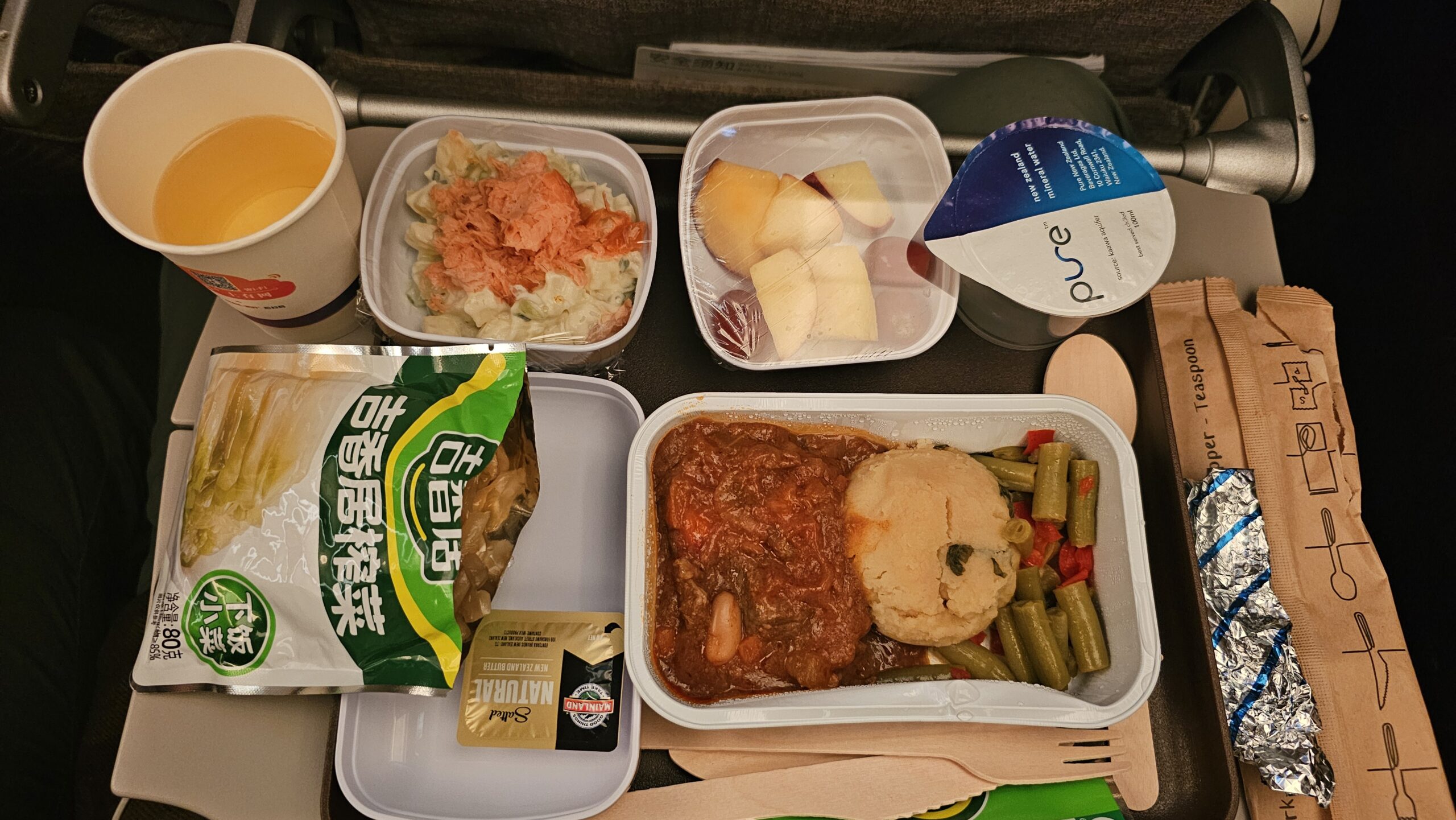
Economy class on China Eastern: I'm 192 cm tall and weigh 100 kg – the legroom was okay, though without much extra space. I expected it to be worse, but I managed the 12 hours. The food was surprisingly decent – I also expected worse. The meals were basically "fillers," but entertaining enough to help pass the time. (The worst item was some kind of "seaweed-cabbage" in a terribly salty brine.) But for that price – what more could you ask for? The drink service was the weakest part – especially on the Shanghai–Auckland route and back. The flight attendants rarely came around with drinks, and when they did, they poured water as if into a thimble. So I definitely recommend bringing your own drinks in sufficient quantity.
On the way to New Zealand (Shanghai – stopover): When we arrived at the terminal and headed to the desks for filling in the temporary entry cards, we were met by an airline staff member in uniform. She had an A4 paper with our names printed on it. I handed her the paper with the QR code you gave us for the transit hotel. When she saw the QR code and the surrounding Chinese characters, she visibly relaxed. She used an online translator to communicate – she didn't speak English herself. Through the translator, she asked if we would be collecting our luggage. When we said no, she seemed relieved again. After passport control, she waited for us past immigration and led us through a side exit to the airport car park, where a driver in an air-conditioned vehicle was already waiting. He drove us straight to the hotel.
On the way back (Shanghai – return flight): When we arrived at the terminal for our return, no one was waiting for us at the desks. We asked a lady at the information desk – she didn't speak English and didn't understand even using a translator. She called for help. After about 20 minutes, another lady appeared. Again, the printed document with the QR code saved the day – she called the airline representative. The rep found us and was helping another client as well. The same arrival procedure was repeated. This time, the second woman spoke excellent English. She also asked whether we'd be collecting luggage – again, she looked relieved when we said no. Then she escorted us via a side route to the airport car park, where a driver in an air-conditioned vehicle was waiting to take us to the hotel.
Transit hotel: The hotel is in a suburban district of Shanghai, about 35 minutes of fast driving from the airport. The neighborhood is bleak – definitely nothing fancy, just raw China. The main issue is payment: outside the hotel, credit cards are practically not accepted anywhere. Alipay is the clear choice. There's enough time to go into the city center, and this definitely enriched our trip.
The hotel itself was EXCELLENT – being able to sleep and shower after a 12-hour flight is priceless. During the transfer, we felt like VIPs. The breakfast – in terms of variety – was a great refreshment compared to typical continental breakfasts. We really enjoyed it. The room – above standard: comfortable, quiet, clean. Unfortunately, it's noticeable that people smoke a lot in China – the pervasive smell of cigarettes was the only downside of our stay.
We arrived early in the morning around 6–7 a.m. and they arranged the return transfer to the airport with us already at check-in (again, using an online translator – nobody at the hotel spoke English). They let us stay in the room until around 10:00 p.m. (our flight was at about 1:00 a.m.). The transfer back to the airport was once in a completely empty old minibus (an experience in itself), and the second time in a standard van.
Photos from Martin R.
The airline "dispatcher" lady, holding a paper with my name, caught up with me only once I was already in the visa queue. Through a mix of broken English and a translator app, I figured out that outside the airport, there's a parking garage with taxi pickup spots, marked clearly — for example, pole D5, which is impossible to miss. She told me that a car would be waiting for me there in about 20 minutes. If I had looked really lost, I'm sure she would've walked me there, but she looked like she was running in six directions at once.
Thunder VPN worked fine. Everyone seemed to have mobile data, so even away from Wi-Fi, translating stuff wasn't a problem.
Nobody I met spoke decent English. And even with the translator, it was often a bit of a guessing game trying to figure out what they were actually trying to say — especially when things got a little more complex.
On my way out, I got approached by five different people, all trying to sell me a taxi ride.
I later ran into the dispatcher lady again in the parking garage — she was escorting another traveler and called the hotel again to double-check that the car was on its way. She told me to just keep waiting.
The ride to the hotel was in a private car sent from the hotel, same as the return trip, which I booked at the reception.
Check-in was immediate when I arrived — around 8 a.m. They even had a free breakfast, served buffet-style.
Getting to the airport three hours early for a night flight was honestly a bit too much — the place was nearly empty. The security X-ray was right at the entrance, so I thought I was done, filled up my bottle with water — only to have it taken away at the next checkpoint. There are water dispensers all around, though. Just a heads-up: tap water is not safe to drink.
From what I've read, Shanghai Airport isn't exactly sleep-friendly, but you can still find a few spots where you could lie down. Not sure what it's like during the day, though.
When entering China, you'll need to give fingerprints, which — had I known ahead of time — might've made me think twice about going through immigration at all. In Auckland, everything was automated all the way through to biosecurity declaration. That's where I finally took out the arrival card.
The only small issue was that I brought a supply of prescription meds for over three months. Fortunately, I'd asked my doctor to stamp a letter just in case — see attached. No one asked about anything else. They didn't even ask for proof of funds.
Overall, the airport staff in Auckland were super friendly and helpful, which is sadly rare these days. I didn't get a stamp in my passport — everything's handled electronically, so I asked, and they confirmed it's all in the system.
After landing, I ended up spending quite a bit of time at passport control. Something about my passport didn't sit right with them — they kept checking things over and over — but in the end, they granted me a 24-hour transit visa.
Unfortunately, no one was waiting for me at arrivals. I didn't see anyone holding a sign with my name. I wandered around for a while… nothing. Eventually, I gave up and arranged my own ride to the hotel. To be fair, it was partly my fault — I forgot to turn off airplane mode. I only realized once I got to New Zealand, where I found a few missed calls and one text I couldn't quite make sense of.
Once I arrived at the hotel, everything was fine. They checked me in with no problem, and I immediately booked my return ride to the airport. I had a room to myself, and they let me stay there the entire day. I arrived around 8 a.m., and left for the airport at about 8:30 p.m. At one point, reception called to ask if I'd mind pushing the pickup time by 30 minutes — no big deal.
I ended up sleeping the whole day and didn't go into the city — again, that's on me. Before the trip, I'd spent the weekend in Budapest with a friend, who talked me into grabbing a beer and hitting the thermal baths at night. I went to bed at 3 a.m., got up at 7, and caught my flight. When I landed in Auckland, I had zero jet lag and adjusted to local time right away.
I want to share an update about our trip to New Zealand and back. First of all, I want to thank you so much again for all your help — I realize just how much energy and stress you saved us. Not just with the flights, but also with all your experience, information, and support.
The experience in China was intense (on the way there we spent the whole day walking and riding around Shanghai), and it definitely left a mark on our memories. I promised to share how the transfer in Shanghai went. On the way there, we didn't have a hotel, so we spent most of the day in the city, and everything went smoothly during the layover (apart from the ever-present contact with the local dystopia). In the end, we didn't use the VIP lounge — we found a nice quiet spot near Starbucks where we could even lie down for a while.
The return trip, in terms of the transfer, brought even more "adventure." I was really looking forward to the hotel because I had a cold and my back was hurting. But when we landed in Shanghai shortly after 4 a.m., no one was there to meet us. I still have no idea why. At the passport/fingerprint check, we were briefly pulled aside and they were intensely checking something in our passports. It's possible that we were sent out a different way than usual, but looking back, that seems unlikely.
When we arrived in the area where all the people with signs were waiting, no one was there for us. We checked repeatedly, for a long time, and even tried to get help at the China Eastern information booth (which was absurd — the lady sent us to the second floor where there was nothing but an exit to the parking/metro and she seemed totally confused). But really — no one was there.
After about an hour and a half, we debated whether to give up or try to get to the hotel on our own, with the risk that if no one had picked us up, they might not be expecting us and could refuse to accommodate us. But I really couldn't imagine spending the day on my feet with that back pain, so we took the risk. We got approached by some Didi drivers — we definitely paid 2 to 3 times more than we should have (we didn't have cash, so we had to make a detour to pay at some partnered shop), but still, it was way more expensive.
HOWEVER, it all ended well. When we walked into the hotel (around 8:45 a.m.), there were two women at reception who didn't speak English, but also a man who seemed to be a manager. He immediately asked if we had come from the airport and knew exactly who we were. He said their driver had waited for us for two hours and had called the hotel several times. But someone from China Eastern was supposed to escort us. Whether we missed them or they weren't there at all — we'll never know. I really have no idea how we could have missed anyone, but that will remain unanswered. The man, though, was incredibly warm and kind — he clearly felt sorry for us. He immediately sent us for a (great) breakfast, set up check-out, and scheduled a ride for us at 10:30 p.m. (our flight was at 1:50 a.m.).
So that was truly a treat, let me tell you.
The afternoon walk was also interesting — this area is no longer served by public transport, and it felt like a totally different Shanghai from our first visit. So, that's about it. In the end, it all worked out great and I'm really glad we took the risk and made it to the hotel on our own.
NZETA: They asked us to show proof of having a valid NZETA already at the airport in Budapest. We'd sorted it out well in advance, but this might come as a surprise to some — you might assume they'd only check it when you land in New Zealand. Nope. Make sure your NZETA is approved before you fly.
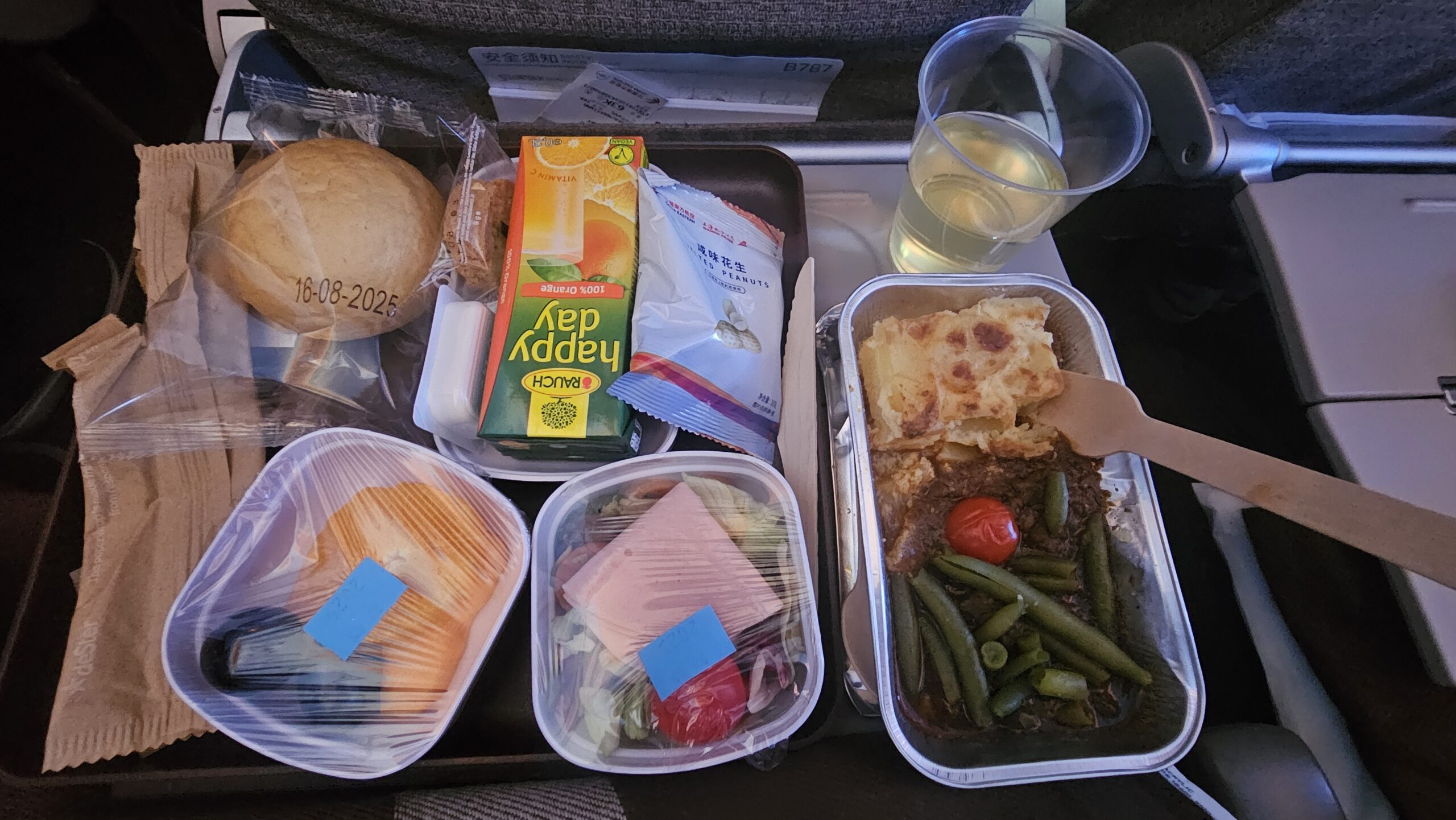
Airplane food: Probably no surprise here — airplane food was… well, not great. I followed the simple rule: when I heard "chicken," I chose that. Unfortunately, one of those times, "chicken" turned out to be chicken organs with rice, and I still feel a bit sick thinking about it. So don't underestimate this part of the journey — bring your own snacks! These flights are long.
One thing that did surprise me was how they had no problem turning on all the cabin lights at 4 a.m. and serving food. I wish I'd brought an eye mask. If you're asleep (or your seatmate says you don't want food), they'll put a sticker on your seat so you can eat later. There's a little flight attendant icon on the remote by your seat if you need help.
Other meals included scrambled eggs with sausage, shrimp in tomato sauce with rice, and noodles with chicken. Each meal also came with fruit, a drink, and something like a potato salad or a small side dish.
Layover in Shanghai: We had layovers in Shanghai both ways. Worked out pretty nicely — on the way there, we had access to a lounge (it opens 3 hours before departure, and ours was at 10 p.m.). On the return trip, we had a transit hotel.
So our plan was: Enjoy daytime Shanghai on the way there and try to sleep at the airport; Explore evening Shanghai on the way back and nap in the hotel during the day.
We were advised to: Install a VPN; Set up Alipay (connect your card for payments); Download the Didi taxi app (China's version of Uber or Bolt). All of it worked fine on our Android phones — didn't try on iOS. I highly recommend setting it all up before leaving the Czech Republic. Also, bring cash. We brought the equivalent of about 3,000 CZK.
Airports (and pretty much everywhere in China) are freezing cold. There's a water dispenser with hot and cold water, so buying a cup and some tea isn't a bad idea.
Temporary entry – China: The entry process into China was probably the trickiest part — both times. When you land, you need to go to Arrivals, not Transfers — obvious, maybe, but after 12 hours on a plane with no sleep, it's easy to mess up.
On the way there, we had to figure everything out ourselves. Eventually, the fourth immigration officer pointed us toward the correct form: a white card with a blue stripe titled TEMPORARY ENTRY. Be careful — the Arrival Card (solid blue) is not enough.
After filling it out, go to the section farthest to the right from the entrance. You'll also need to scan your fingerprints — there are machines before you enter the immigration queue. This is only required on your first entry — they link your prints to your passport.
Fun fact: we're a family of Jan, Jana, Jana, and Katerina, so the similar names caused some confusion at immigration. Also, the whole "Czechoslovakia" as place of birth thing threw them off.
When we first entered China, we tried using Didi, but didn't know what to input as our starting point. A guy with an "Uber" badge around his neck offered to help, looked kind of legit… but in the end, he just put us in a random car, and we paid around 600 CZK cash for the hour-long ride to Yu Garden. It turned out fine, although at first I was like, what have we done? Yu Garden was amazing — so many impressions, we totally forgot we were exhausted.
On the way back to the airport, we actually managed to use Didi and it worked great. Same on our return trip to Budapest — we used Didi both to get downtown and then back to the airport.
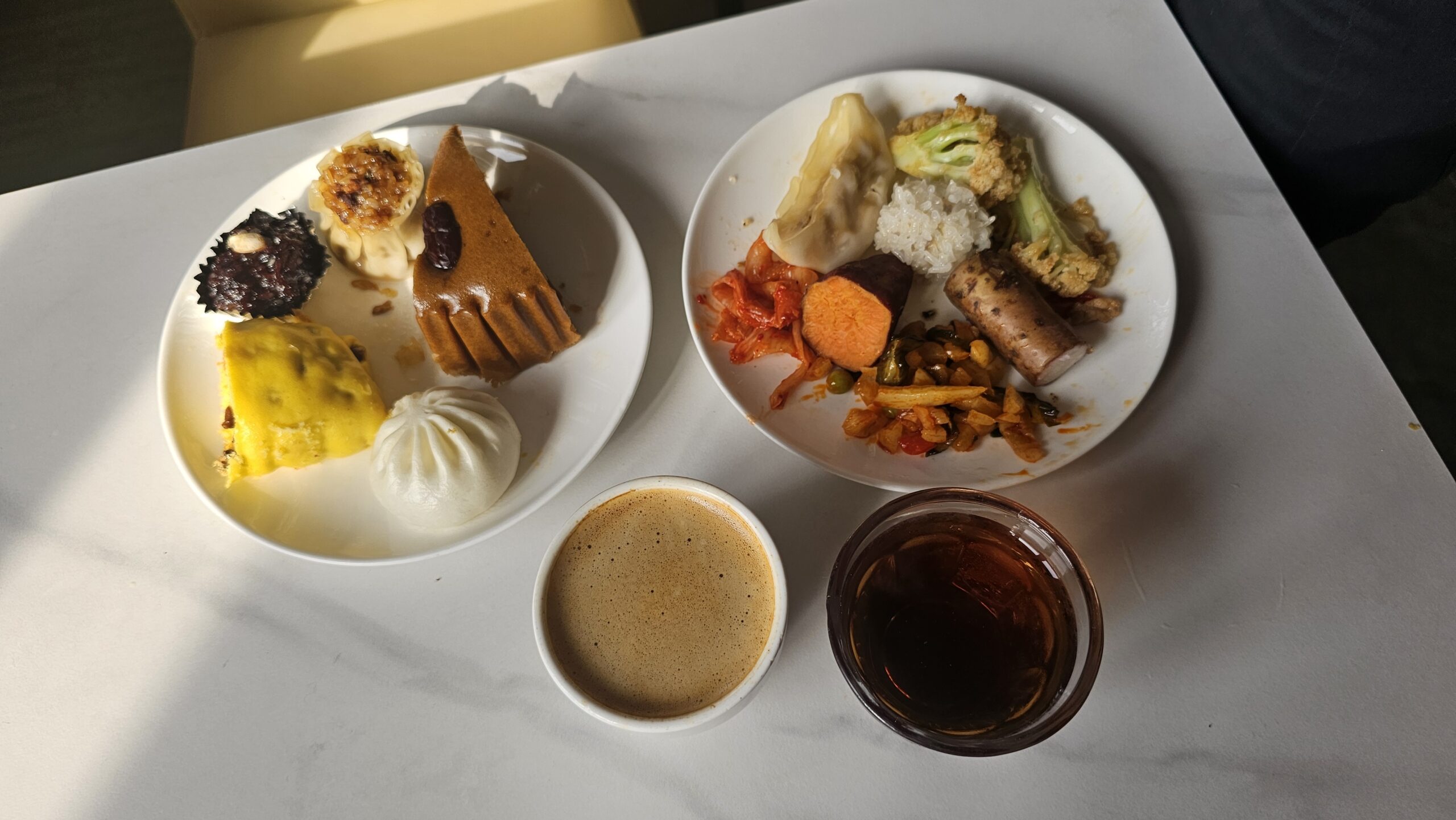
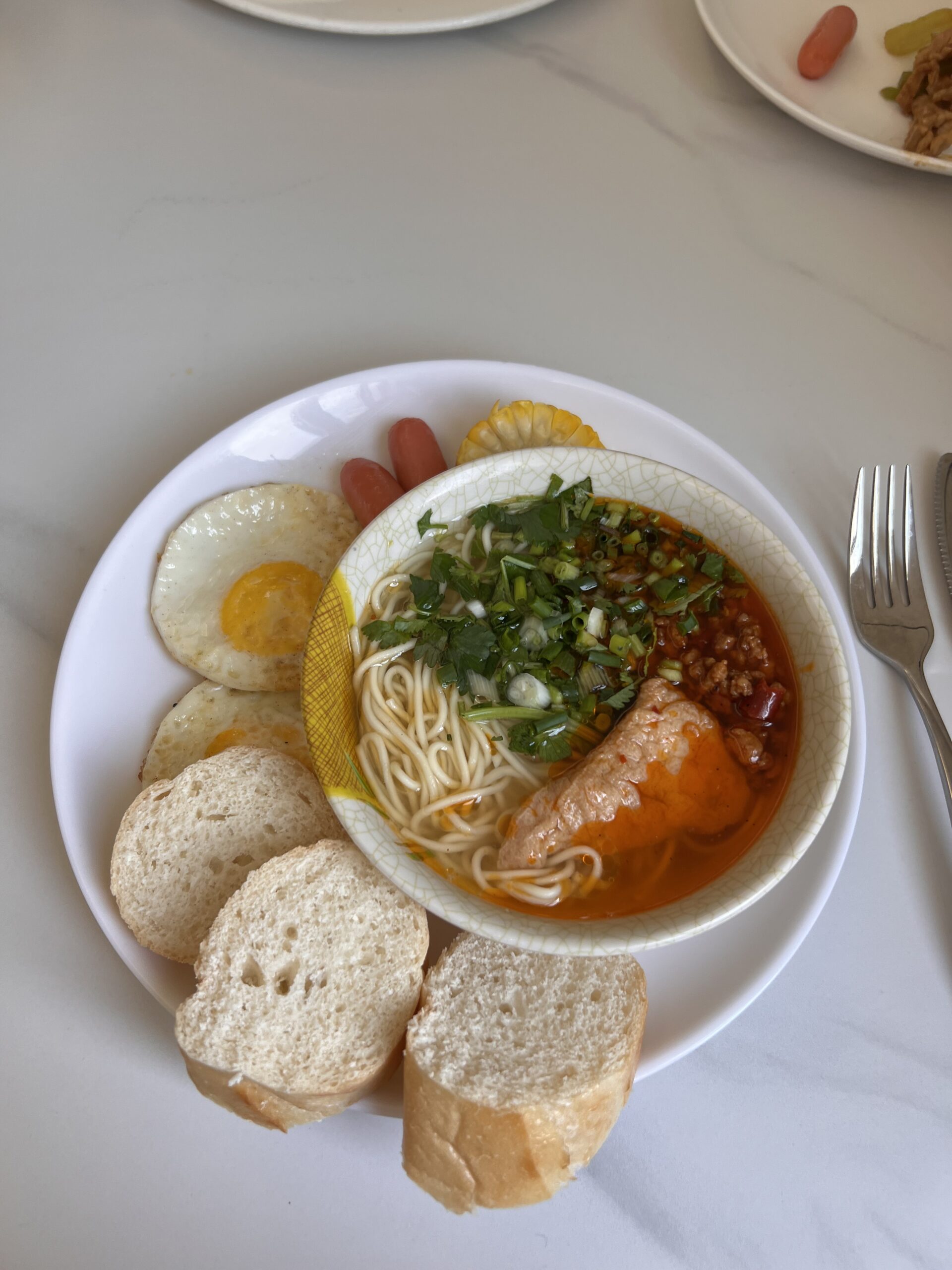
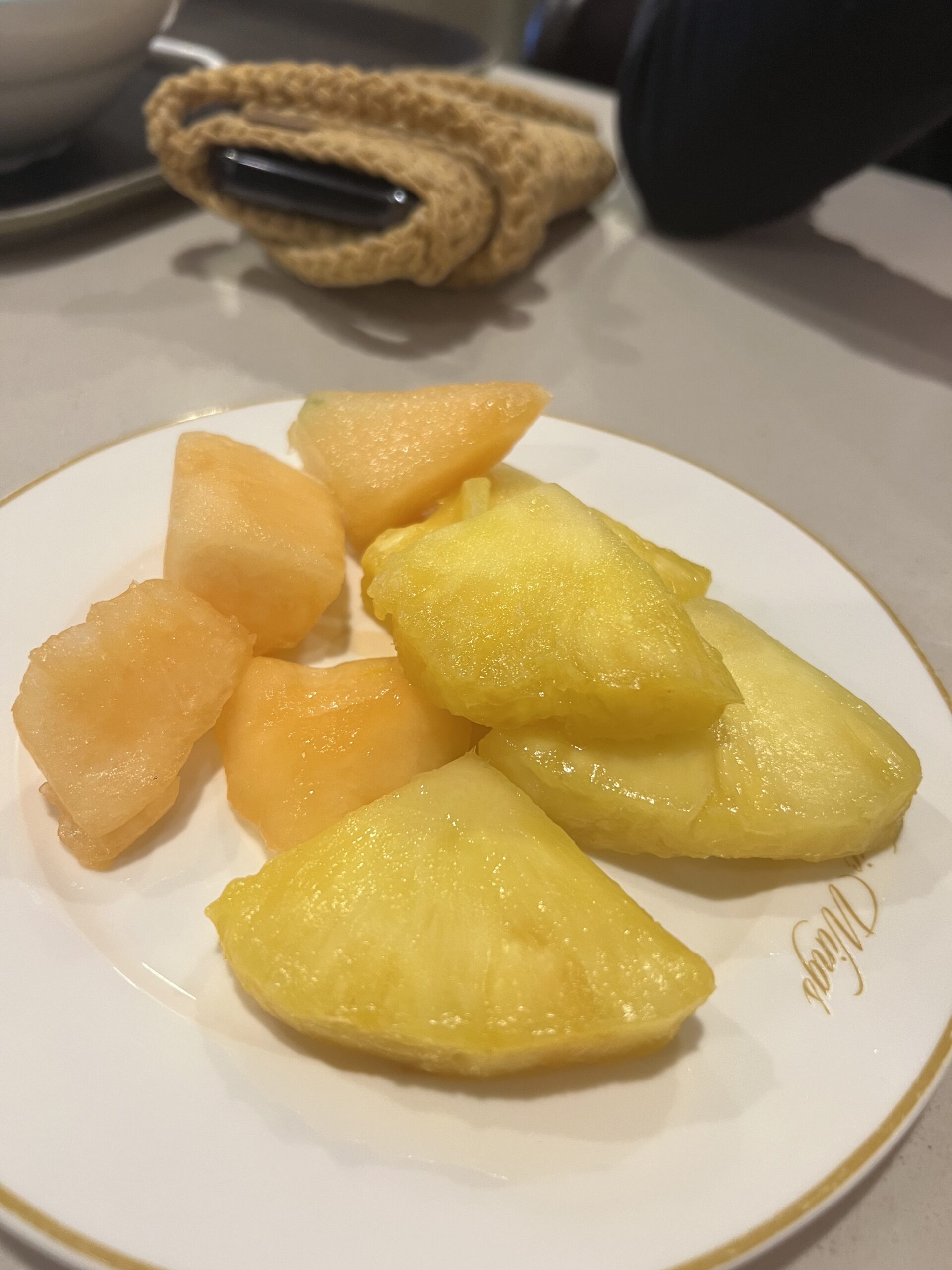
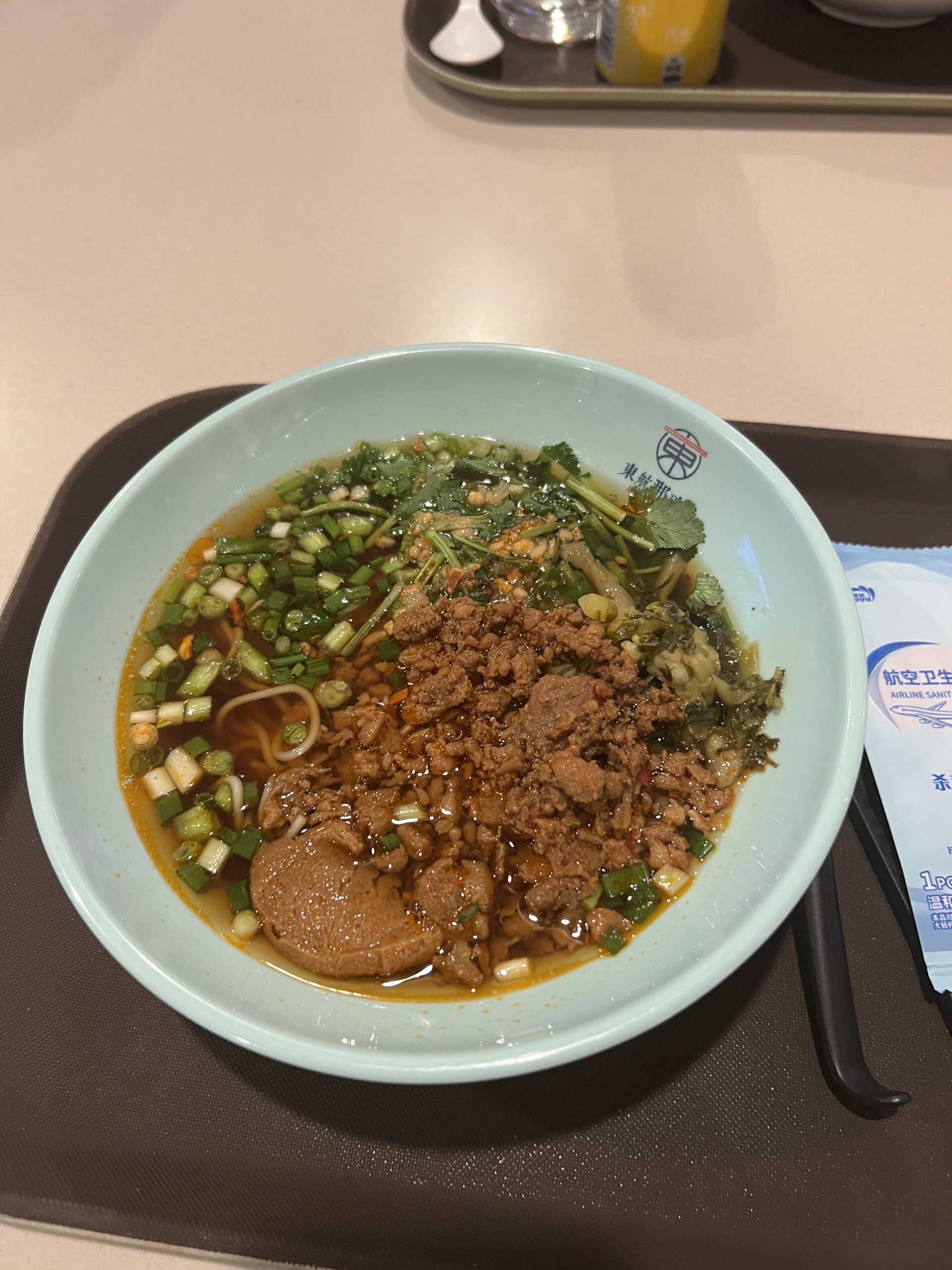
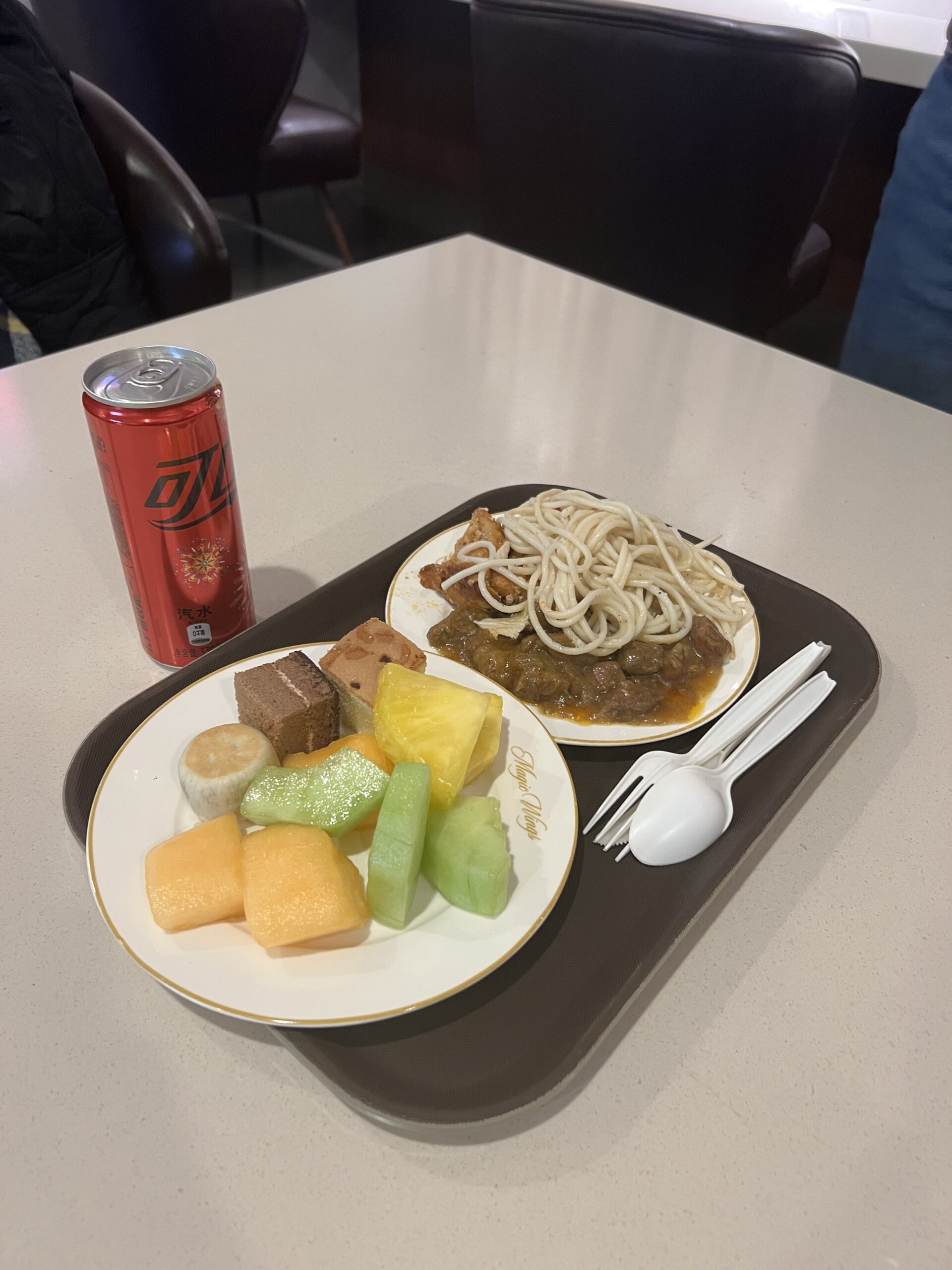
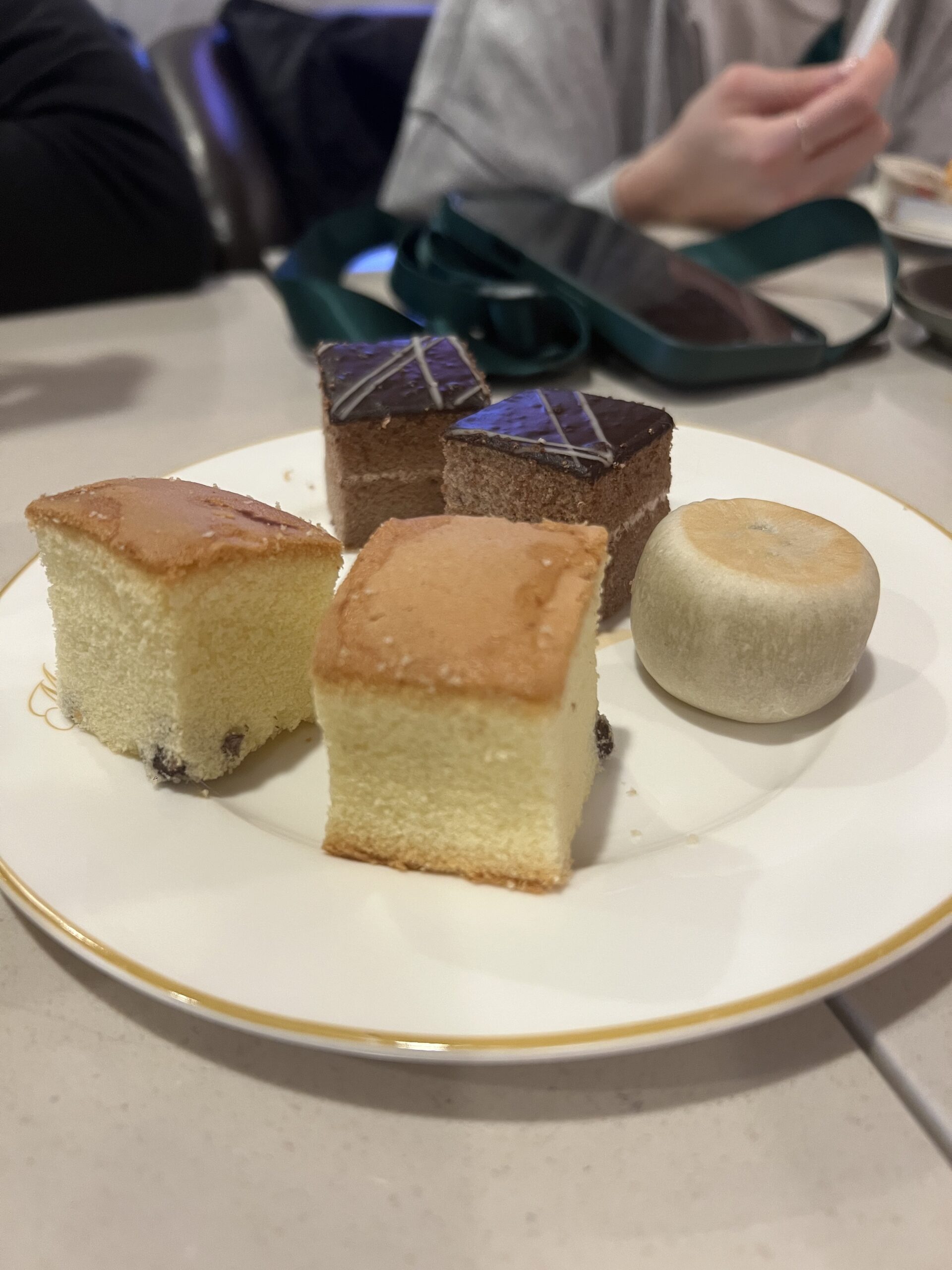
Airport lounge: The lounge was by gates 36/39, past security. We showed the QR code from the app and had no issues. There were showers, but we didn't use them — we didn't have towels and weren't sure if any were provided. The food was buffet-style — I'll attach some photos. Highly recommend their soup station — they cook the noodles right there, add broth, and then you can top it with things like spicy ground meat and seasoned oil. I loved it.
Transit hotel: Before our trip, I saved screenshots from the app to my phone, just in case. As mentioned, for the transit hotel, a lady was waiting before immigration, holding a paper with our names on it. She wasn't sure which forms we needed, but spoke decent English — enough to get by. She ran around a bit scanning our passports at some machine, which then printed out an Arrival Card with our info — but she just left it lying there, so I picked it up before it got lost. Moral of the story: keep an eye on your documents.
After immigration, she waited for us and guided us to the parking lot where the shuttle bus was waiting (it had the hotel name written on it). The ride was wild and fast, and the bus reeked of cigarettes.
The hotel itself looked like a palace. At the front desk, they checked us in and told us we could stay until 10 p.m. That's not guaranteed — we were told checkout is usually around 2 p.m. They arranged a shuttle back to the airport for us.
The hotel manager spoke good English and gave us recommendations, even offered metro advice — but we didn't dare try that. The front desk ladies were super helpful and had a translator app ready to go.
We planned to enjoy Shanghai's evening lights, so we didn't use the whole stay, but for someone else, this could be perfect. One note: the room key card only worked until 12 p.m., so we had to go back to the front desk to reactivate it afterward.
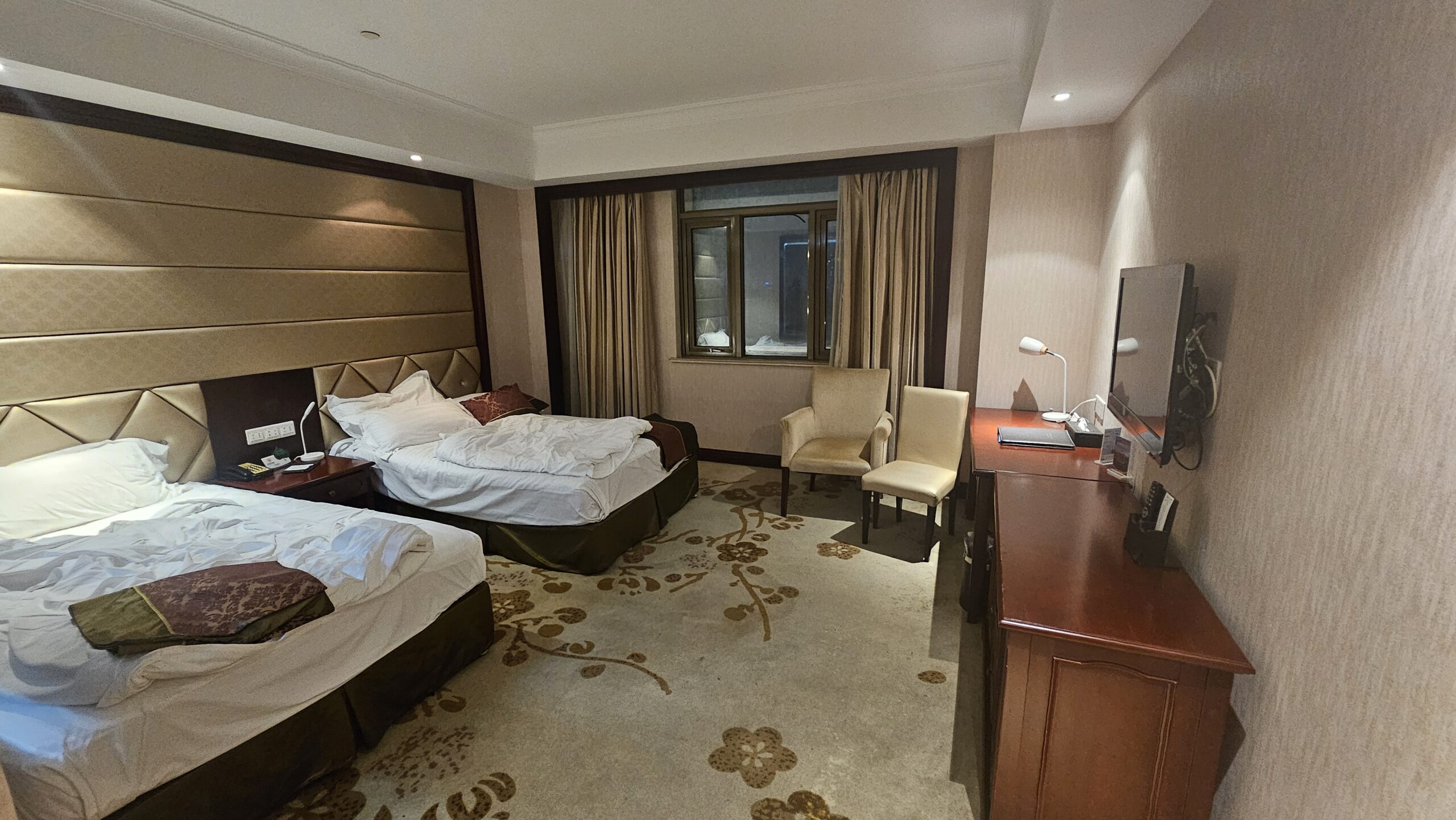
They gave us 3 rooms for 4 people (6 beds total). All rooms were the same: two large beds, a bathroom, hairdryer, towels. The rooms definitely smelled a bit old and smoky. The hotel was freezing, but luckily, we could heat the rooms easily using a thermostat.
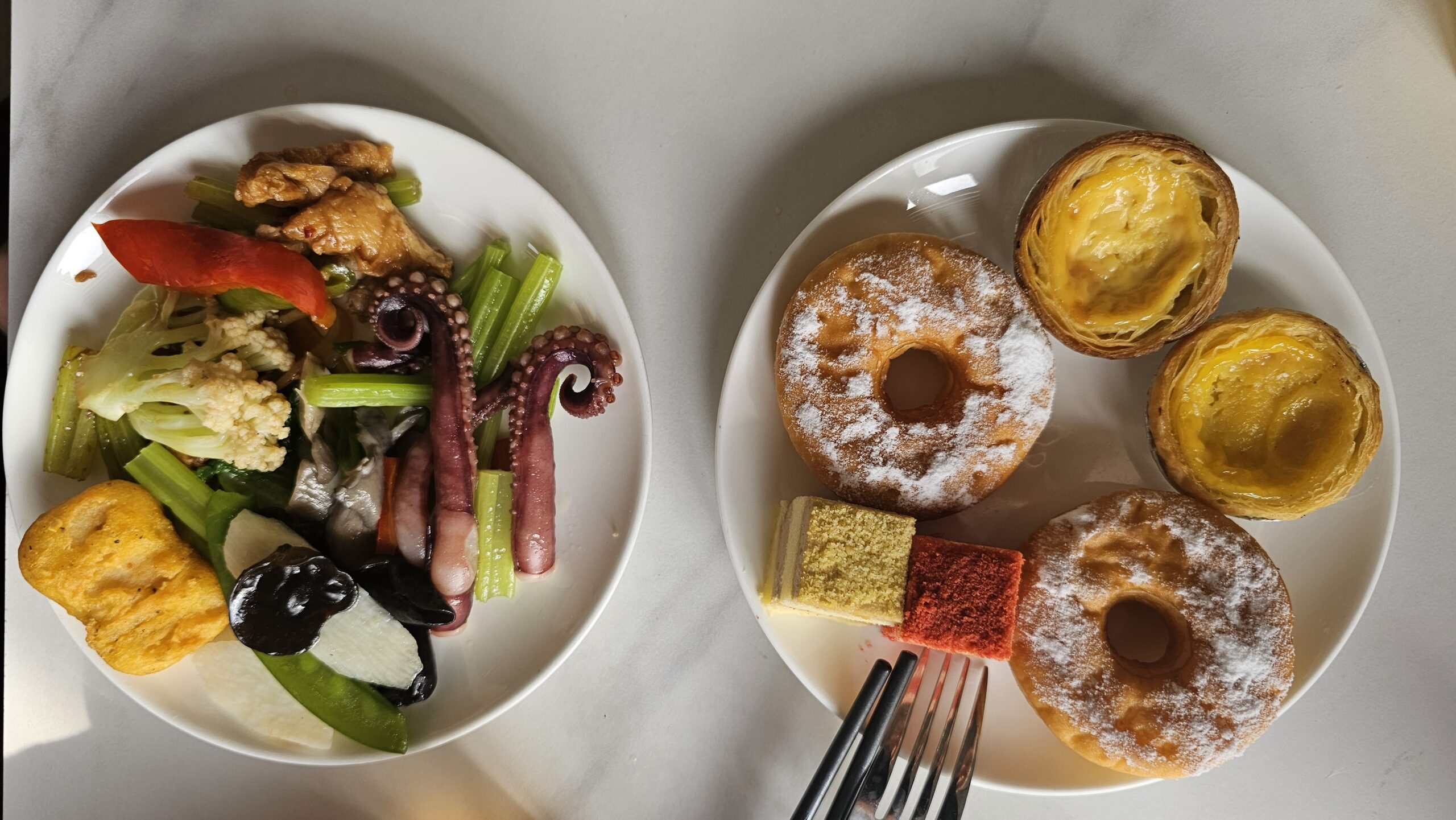
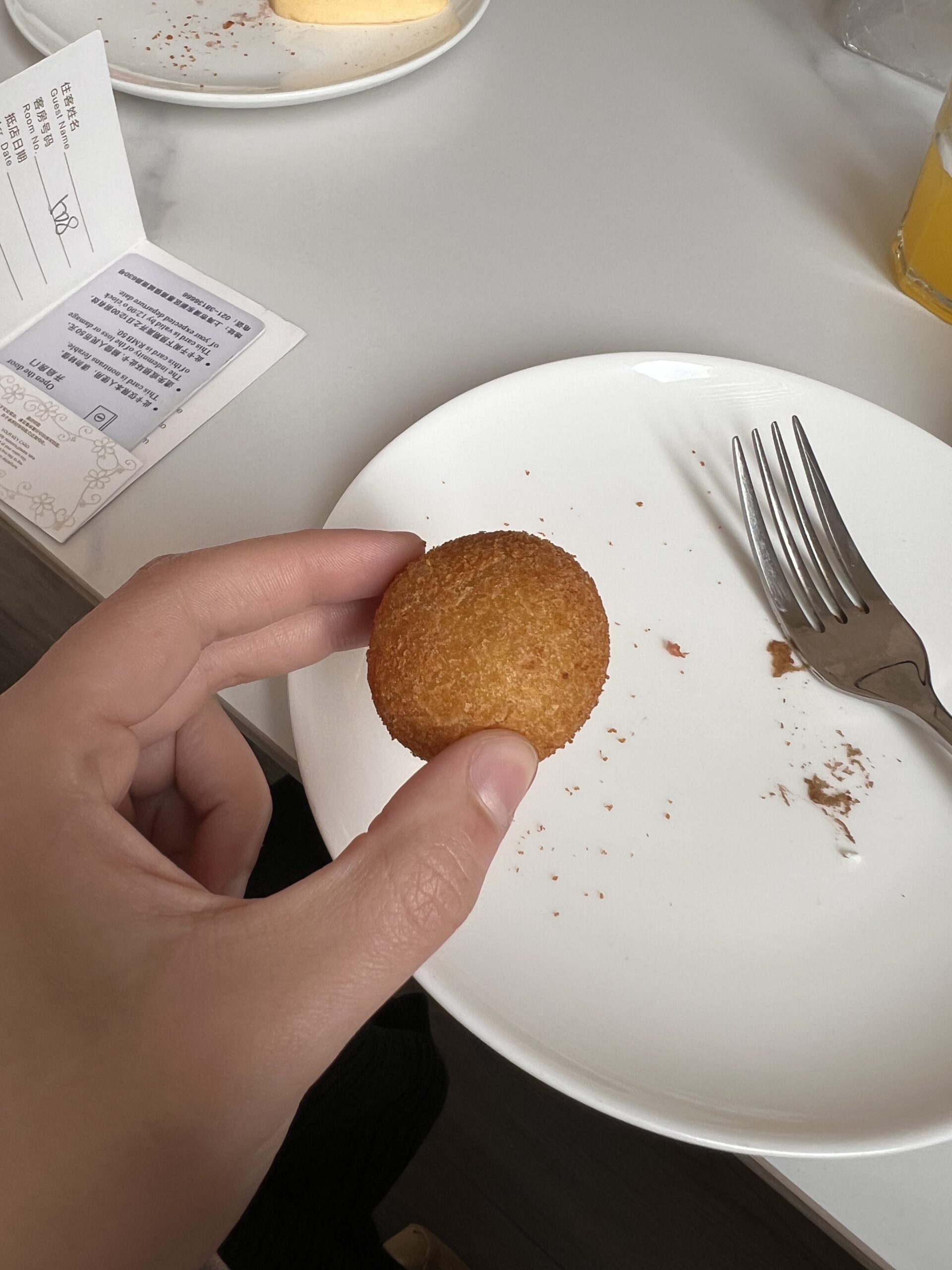
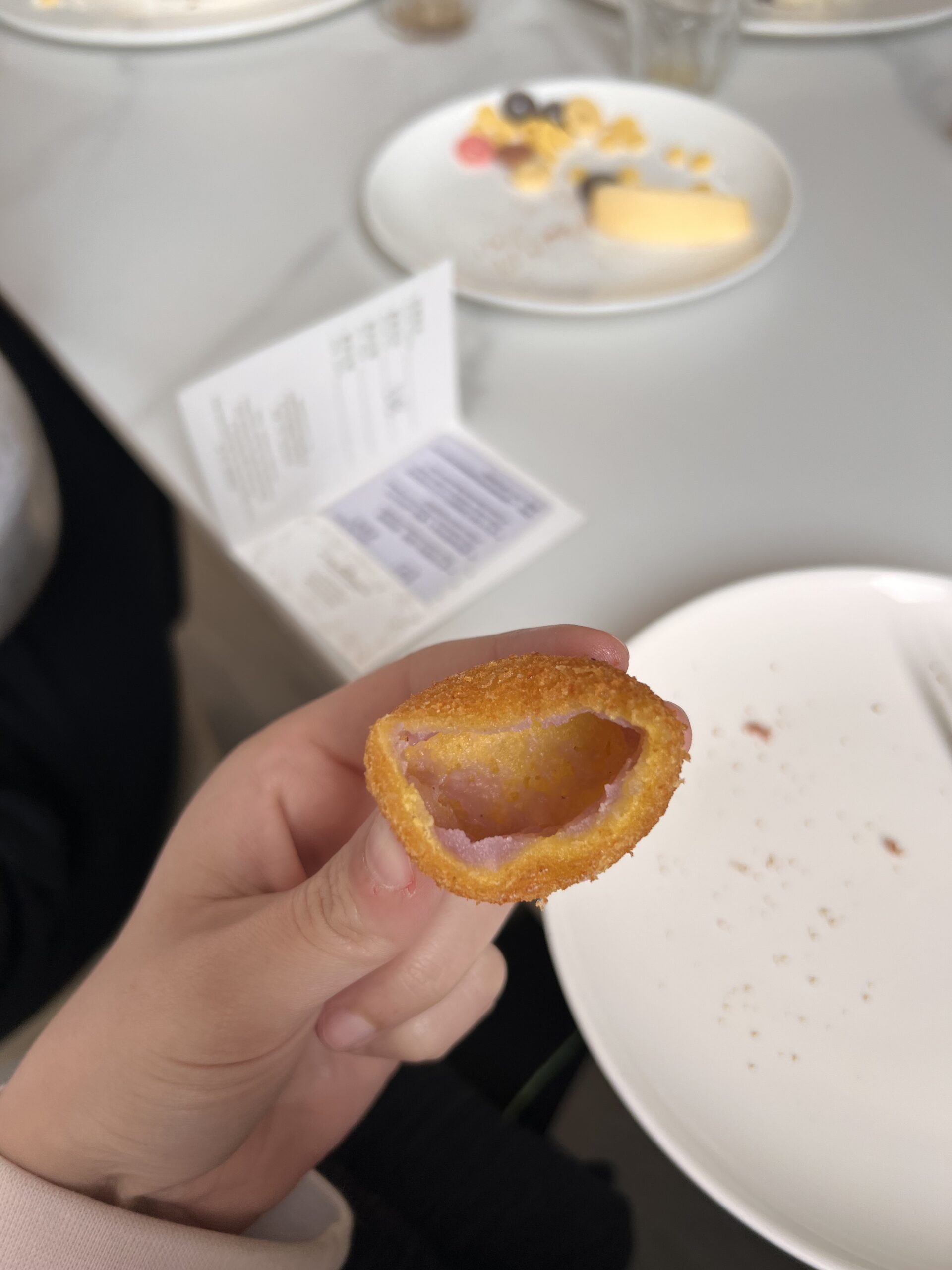
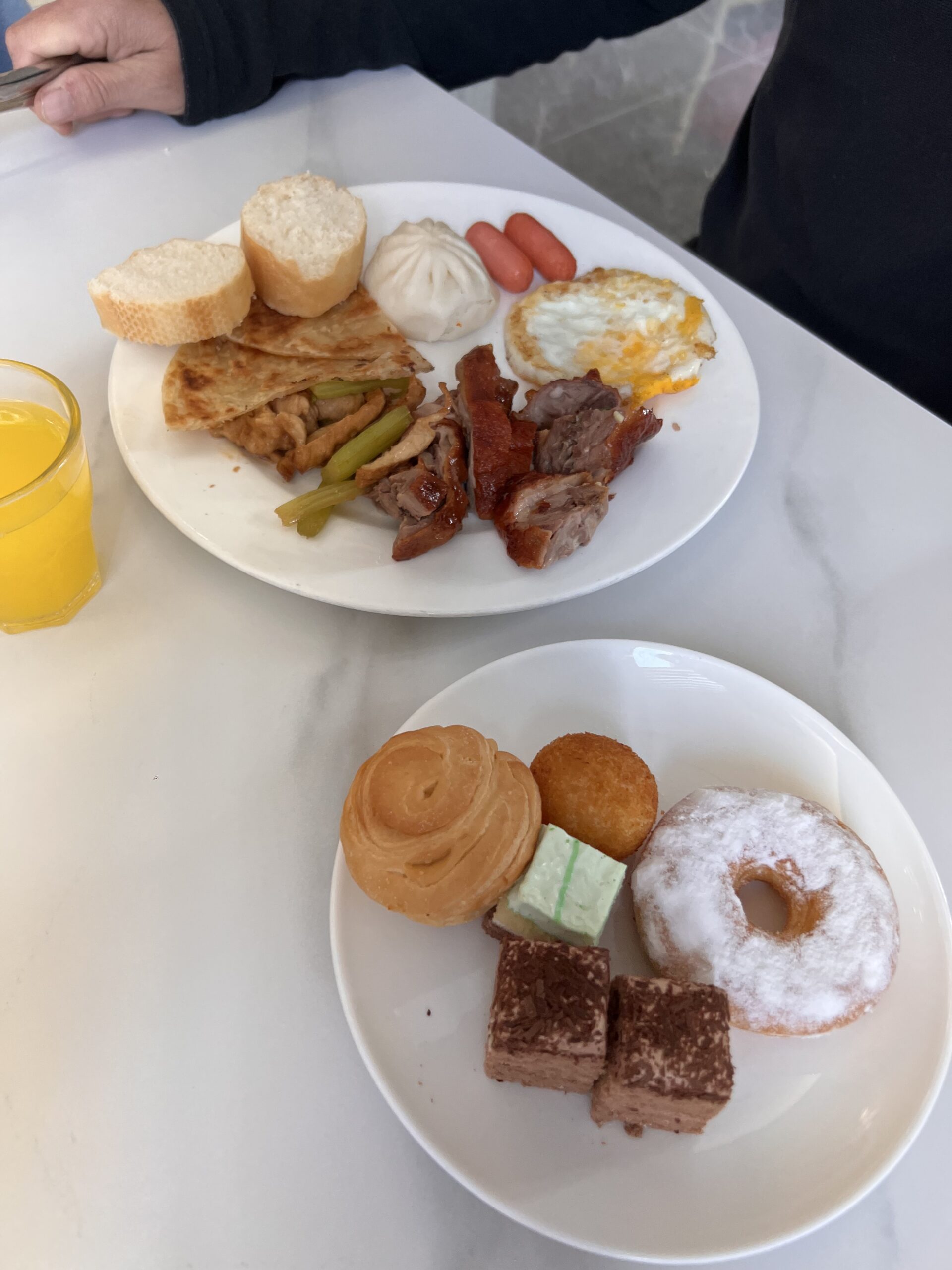
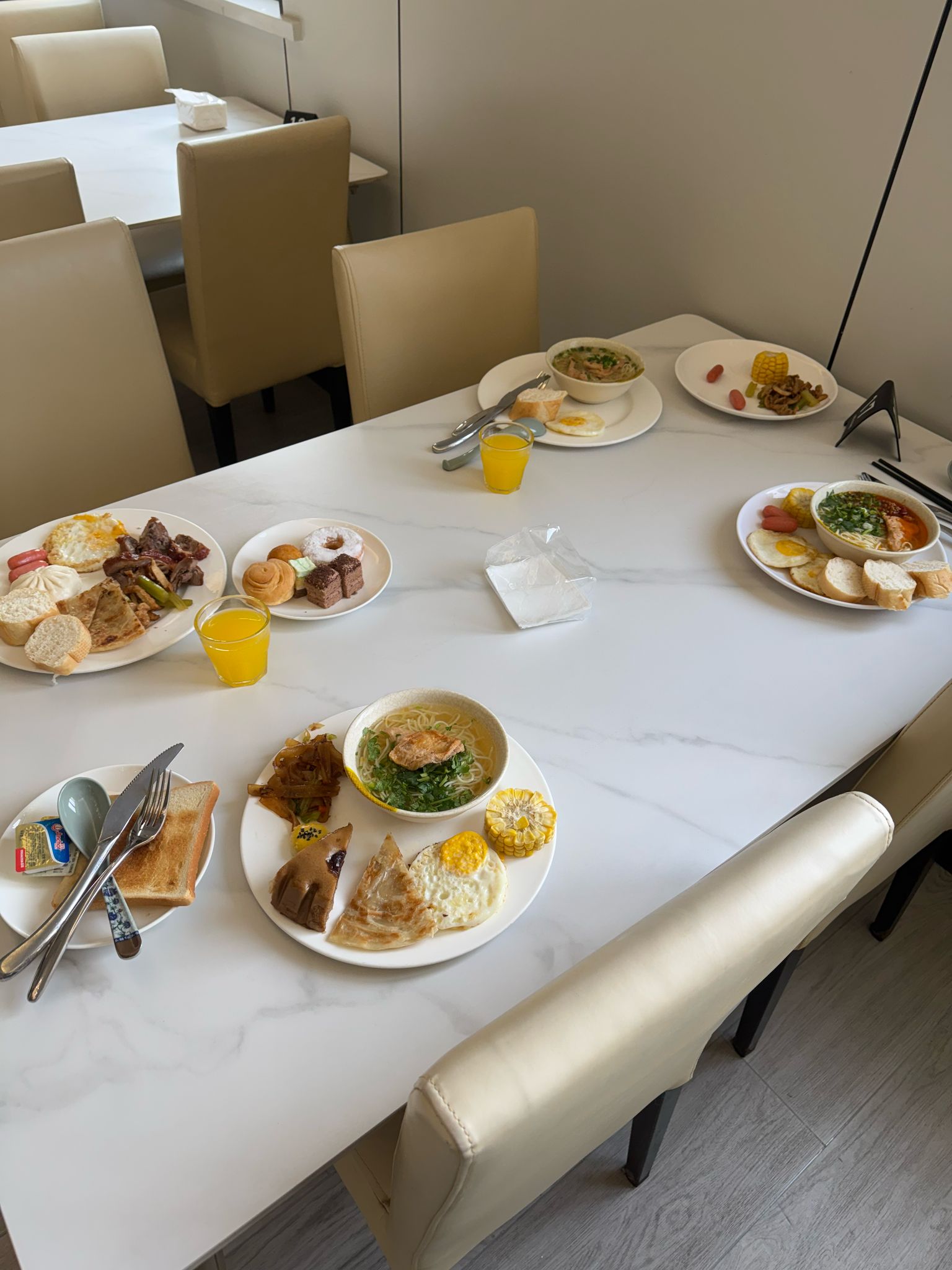
Breakfast was similar to what we had in the lounge — noodles, soup, lots of mysterious dishes, but also eggs, toast, jam, butter, and fruit. We especially loved the "fried nothing" — a croquette with some sort of creamy filling.
Our strategy: grab a little of everything and then go back for the good stuff.
Arrival in New Zealand: We listed everything on our declaration form — even our down jackets. No problems entering NZ, though. The whole process took a while, and we were at the airport for about 2 hours.
One tip / minor fail: We'd booked a hotel in Auckland for our arrival night and used Booking.com's taxi service. They guarantee that the taxi will wait up to 45 minutes after landing, but you can't really adjust that time — and of course, we didn't make it in time. So yeah, I wouldn't recommend that service. Thankfully, Uber worked perfectly in Auckland. If you've got lots of luggage, go for Uber Comfort — we didn't, but our driver was super chill and punk, and we somehow managed to stuff everything in.
Photos from Katka K.
What an experience. Both flights were fine (I was just groggy from the aircon). China — well, I'd met "a few" Chinese people before, so the "whatever, don't bug me" attitude didn't surprise me much; you get used to it. I just really wanted to sleep.
I got off the plane, filled in the visa slip and queued (twice, actually — they handed me the wrong slip first). Then, maybe 40–50 minutes after landing, I looked for someone holding a sign with my name. There were only 5–7 people at the exit, so I really couldn't have missed it. At the information desk they said they couldn't help and sent me to China Eastern, then to a guy who said I'd have to wait half an hour for someone from CHEA. The woman who eventually came told me (through her phone translator) that if I had the address I could just take a taxi — and that they don't cooperate with this hotel (turned out she was a CHEA manager).
So I went to a different customer service desk — they actually helped, called the hotel (the driver had supposedly waited over an hour, no idea where), and sent me to wait by some doors. The lady found me there and walked me to the taxi and on to the hotel. They even had breakfast waiting, though I felt too rough to enjoy all that food. Then I finally went to sleep.
Boarding, etc. all went smoothly. As some people mentioned in their reviews, I'd also recommend bringing your own water and some snacks — the in-flight service wasn't very frequent.
At both the airport and the hotel, Wi-Fi worked for me when I used Thunder VPN. All apps ran without any problems. The officers I spoke to spoke English. Although the process of filling in all the forms was a bit complicated and took quite a lot of time (they checked everything thoroughly), I'd recommend allowing extra time — especially if it's just a layover.
No one from the hotel was waiting for me at the airport. I went to the information desk, showed them the QR code, and also had the hotel's phone number. They called the hotel and asked them to send a driver for me. The staff at the information desk spoke English too — they used a translator for some things, but overall we communicated fine in English. The hotel was called several times; I think they probably hadn't sent anyone yet. I ended up waiting about an hour and a half before someone arrived. A man showed up with a minibus — I was the only passenger, so I'm not sure where they found that driver. He didn't speak any English.
At the hotel, the receptionist spoke English, though not very well — she was actually the hardest to understand. She didn't mention anything about meals, so I asked, and she gave me a meal card. It only covered breakfast, which was served until a certain time. I didn't quite catch until when, so I went right away — I recommend doing that, as the area closes afterward. I was tired and still full from the flight, so they called a cook who spoke English, and I arranged to take my food in boxes to my room. That was great — since I arrived in the morning, I took both lunch and dinner for the day. Note: if you take your food in boxes, you can't eat in the dining area. Breakfast was buffet-style — I could take whatever and as much as I wanted.
I had the room to myself. It was smoky, which was probably the worst part (editor's note: when booking a transit hotel, you can select a non-smoking room — I recommend doing that if you don't plan to smoke in your room). Unfortunately, there was no electricity except for one socket that powered a lamp, which I used in the evening. My power bank saved me for charging my phone.
I got my check-out time directly at the reception. They later changed it because it happened to be a Chinese holiday and the airport wasn't operating at full capacity. The return transfer was with the same driver, and everything after that went smoothly until departure.
The trip was great — considering it took over 40 hours, it went by incredibly fast. On the way to Shanghai we had no issues at all. In Shanghai, a hotel representative was waiting for us right after arrival, helped us with everything, and walked us all the way to the shuttle that took us to the hotel. No problems at the hotel either. Whenever English didn't work, our offline translator saved us. We arranged the transfer back to the airport at the reception without any issues — actually, they mostly just told us the pickup time, and all we had to do was show up. Apart from the driver, who was going 150 km/h in a 60 zone, everything was fine. On the flight from Shanghai to Auckland we had the most unpleasant flight attendants I've ever seen, and we didn't receive headphones — and our own ones didn't fit — but other than that, everything was okay. The food was also fine.
In Shanghai, it's important to be prepared for the fact that none of our (Western) payment cards are accepted, so you either need to withdraw cash or use their local payment apps.
Recommendation: buy a day pass at the metro service counter, because everything in Shanghai is quite far from each other. As for VPN, the Leaf app worked perfectly for me.
Our journey to New Zealand started in Budapest. We flew through Shanghai, where we had a planned 19-hour layover before continuing to Auckland. We prepared very thoroughly because one of us was flying with an old passport due to a surname change. By Czech law, the passport is still valid for three months after the wedding, but we didn't know whether Chinese immigration would know or accept this. We didn't want to take any risks, so we brought the new passport, a marriage certificate with an apostille translated into English, and printed out everything we possibly could.
At check-in in Budapest, they checked our New Zealand visas, and we surprisingly didn't have to show them again anywhere else. Our checked baggage was tagged directly to Auckland, which was great because we planned to explore Shanghai during the layover.
We were a bit worried about flying with a Chinese airline, but everything was perfectly fine, including the food, legroom, and the overall inflight service. After landing, we followed the signs to Arrivals and soon reached immigration. Even though reviews had suggested filling in both the Arrival Card and the Temporary Entry Card, a security officer told me to fill out only one — which turned out to be a mistake. I had to redo it. So make sure to fill out BOTH the arrival and temporary entry forms, which are printed on the same white paper with a blue stripe. Most people fill out only the arrival card, but don't let that confuse you.
Despite the stricter atmosphere, immigration granted us 240-hour transit visas without any issues. They only asked whether we were in China solely for a transit, whether we had a hotel booking (I showed them the confirmation SMS), and a few simple additional questions. We had the hotel arranged in advance thanks to CzechKiwis.
After immigration we arrived in the arrivals hall, looking for a hotel representative with a sign. We couldn't find anyone at first, but after a moment we met a lady who had been looking for us at a different gate. She said she tried calling me earlier — recommendation: turn off airplane mode immediately after landing, but I would avoid answering calls because of high roaming charges. It's safer to connect to airport Wi-Fi and send an iMessage instead. This part of the journey requires a little improvisation.
We had bought mobile data for China (3 GB for 4 USD) through Airalo, which provides a 3-day eSIM. We also downloaded the Didi taxi app (like Uber — works reliably) and Alipay, which you can use to pay almost everywhere.
The lady led us to a driver who was still napping in his parked car, and he took us to the hotel.
At the hotel, everything was prepared for us. They had a printed QR reservation, although they didn't really need it. We just confirmed our names and let them scan our passports. Our next flight was just after midnight, so they told us to be ready at 20:30 when the shuttle bus would depart. Breakfast was on the 4th floor — quite an experience, but there were plenty of familiar options for Europeans. The room was beautiful and clean, although we couldn't connect to the Wi-Fi.
We recommend visiting the Shanghai Wild Animal Park. We got there and back easily using Didi.
At 20:30, the shuttle bus (where we were the only two passengers) took us back to the airport. From there, we took the terminal train to our gate, went through several security checks, waited a few hours, and boarded the flight to Auckland.
Upon arrival in Auckland, we collected our bags and headed to the "feared" biosecurity check. We filled out the declaration form in paper format on the plane (it can also be submitted online up to 24 hours before the flight). Along the way there were many signs reminding passengers about the check, so there's no chance of accidentally reaching the inspection point before disposing of prohibited items. The officer simply asked what fruit we were carrying and whether we had any outdoor equipment; without even checking our bags, he let us through. So my list of 30 items I was prepared to declare was completely useless. After that, the bags just went through a scanner.
Documents we actually needed printed: New Zealand visas, possibly the hotel reservation QR code. Documents we didn't need printed: Proof of sufficient bank balance, travel insurance confirmation, printed flight tickets.
Apps we used: eSIM data (so we didn't need any VPN at all; all apps worked perfectly), offline Google Translate (Czech, English, Chinese downloaded), Alipay, Didi taxi, Mapy.cz with offline Shanghai area, Google Maps. Apps we didn't use: Chinese Translate, Translate (backup offline translators), Thunder VPN and ExpressVPN (we activated a free 7-day trial and cancelled, but didn't end up needing them), WeChat (no idea why we downloaded it), and Amap (backup for Maps).
As I said, we were quite nervous about flying on an old passport, so we printed and prepared absolutely everything. In the end, the entire journey was completely smooth, and we arrived in Auckland without a single issue.
When we landed at the airport, we were immediately overwhelmed — not just by the sheer number of cameras, but also by the fact that we had to take the metro to get from one terminal to the other. That definitely threw us off. We wandered around for a bit, but with the help of an offline translator, airport staff eventually pointed us in the right direction. We went from Terminal 1 to Terminal 2, just one stop away.
Now for the fun part — getting to the hotel. We were booked at Primus Hotel Shanghai Sanjiagang. Before we even got to the visa area, I got a call from a lady who was apparently in charge of our hotel transport. We couldn't understand a single word of her English. We tried to explain we were still at immigration, needed to fill out the visa forms, and go through passport control.
She kept talking. For ten straight minutes. Zero progress. We asked her to send us a text instead, telling her we didn't understand her. Then she passed the phone to another woman, who also said something… again, no clue what. She then started mumbling something in Chinese, which we took as a kind of "go deal with your stuff" moment.
After ten minutes of pointless phone conversation, we hung up. We needed to get through immigration first. At that point we figured we'd just grab a taxi to the hotel — it was close anyway.
Thankfully, we ran into a fellow Czech while filling out the visa forms, and he literally saved our butts. Big shoutout to Kuba — if you're reading this, thank you again!
We filled out the correct visa form (note: it's the WHITE one, not the blue one — that took us two tries). Got through immigration… and lo and behold, guess who was waiting for us on the other side with a sign bearing our names? Yep. The same lady we hung up on. She must've waited for like two hours, so you can imagine she wasn't exactly thrilled.
She told us there was either a shuttle bus in a bit over an hour, or we could take a taxi. We were totally wiped, so we chose the taxi.
Problem: no credit cards accepted. Only cash or Chinese mobile payments. Luckily, Kuba was still with us and lent us 200 yuan, which got us to the hotel. (Be aware: taxis don't give change, so you'll need to break bills somewhere.)
The ride to the hotel cost 40 yuan, the return trip was 55 yuan. Once at the hotel, I finally had time to download their payment app (using mobile data + VPN), and from then on we managed fine. But honestly — after that whole ordeal, the only thing we cared about was getting to the hotel and collapsing into bed. So that was our China transfer adventure. The ride back to the airport from the hotel? Smooth as can be.
Looking back, yeah — we probably should've done a bit more research, at least downloaded the payment app in advance. But hey — there's just so much going on before a trip that this one slipped through the cracks. Oh well. Hopefully someone reading this can learn from our experience and avoid the same mess. Real talk: if we hadn't met Kuba, we probably would've spent the night on the airport floor.
Currently chilling at the hotel in Shanghai — and let me tell you, VPN totally saved me.
As for the hotel transfer, it couldn't have been easier. Right after getting off the plane, a flight attendant was already waiting with a paper with my name on it and some basic info about the hotel.
I went through everything at the airport with her — she helped me fill out the forms, called the shuttle driver, and even walked me all the way to the bus. The bus ride was free, and it took about 20–25 minutes to get to the hotel.
Going back to the airport is on the same shuttle — I booked it at check-in. Check-in was super easy — just showed them a screenshot from the app.
Bit of a shame I have to check out at 2 p.m., since my flight's not until 00:15, but hey — I've got a bed to stretch out on, a hot shower, and free breakfast, so I'm not complaining. Also, I've got the room to myself, for now at least.
Only real issue? Communication in English. Whether at the airport or the hotel, they didn't understand much — but we somehow made it work in the end.
As for sleeping at the airport — there were a few spots where you could actually crash pretty comfortably.
Photos from Erik
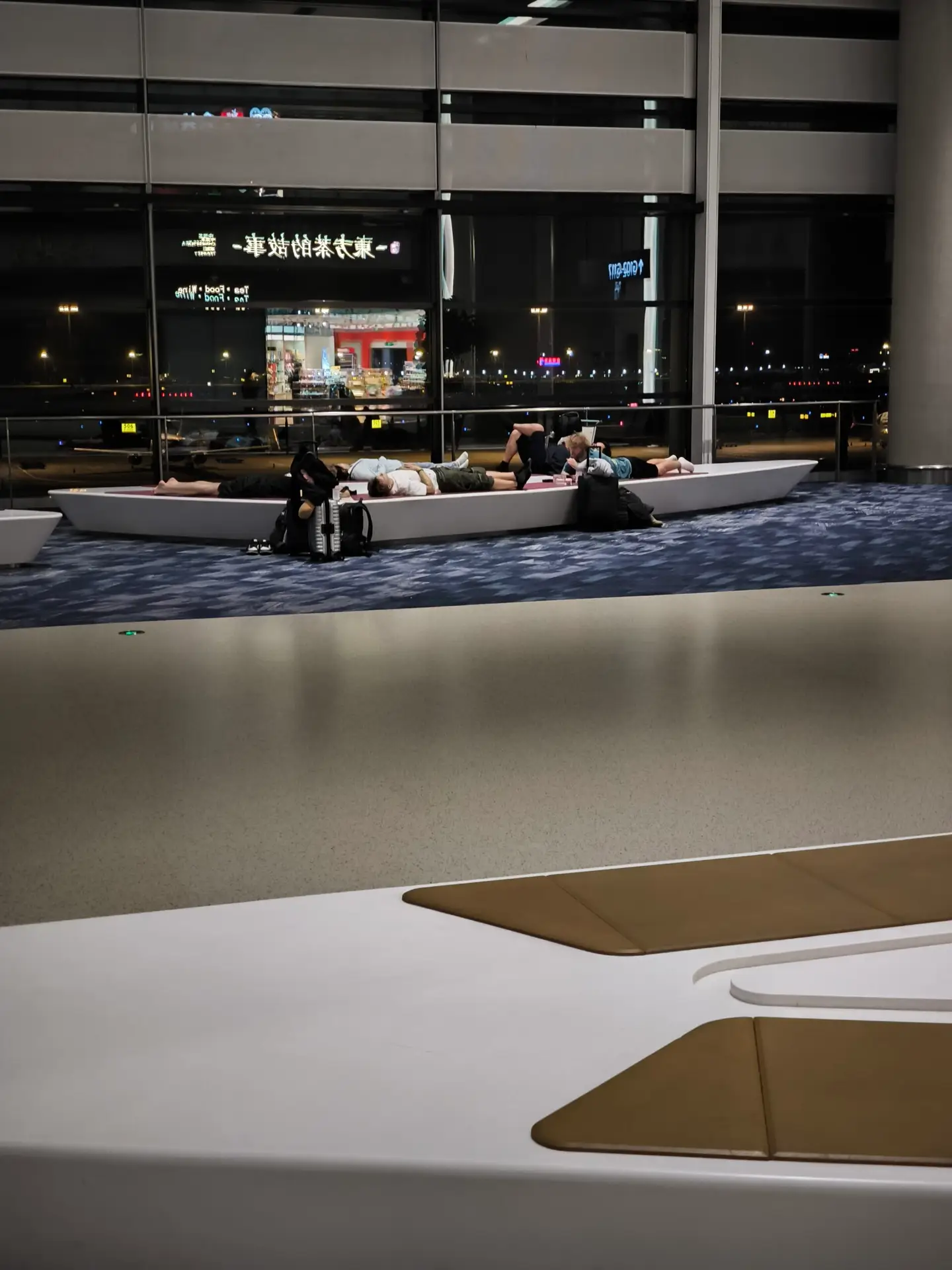
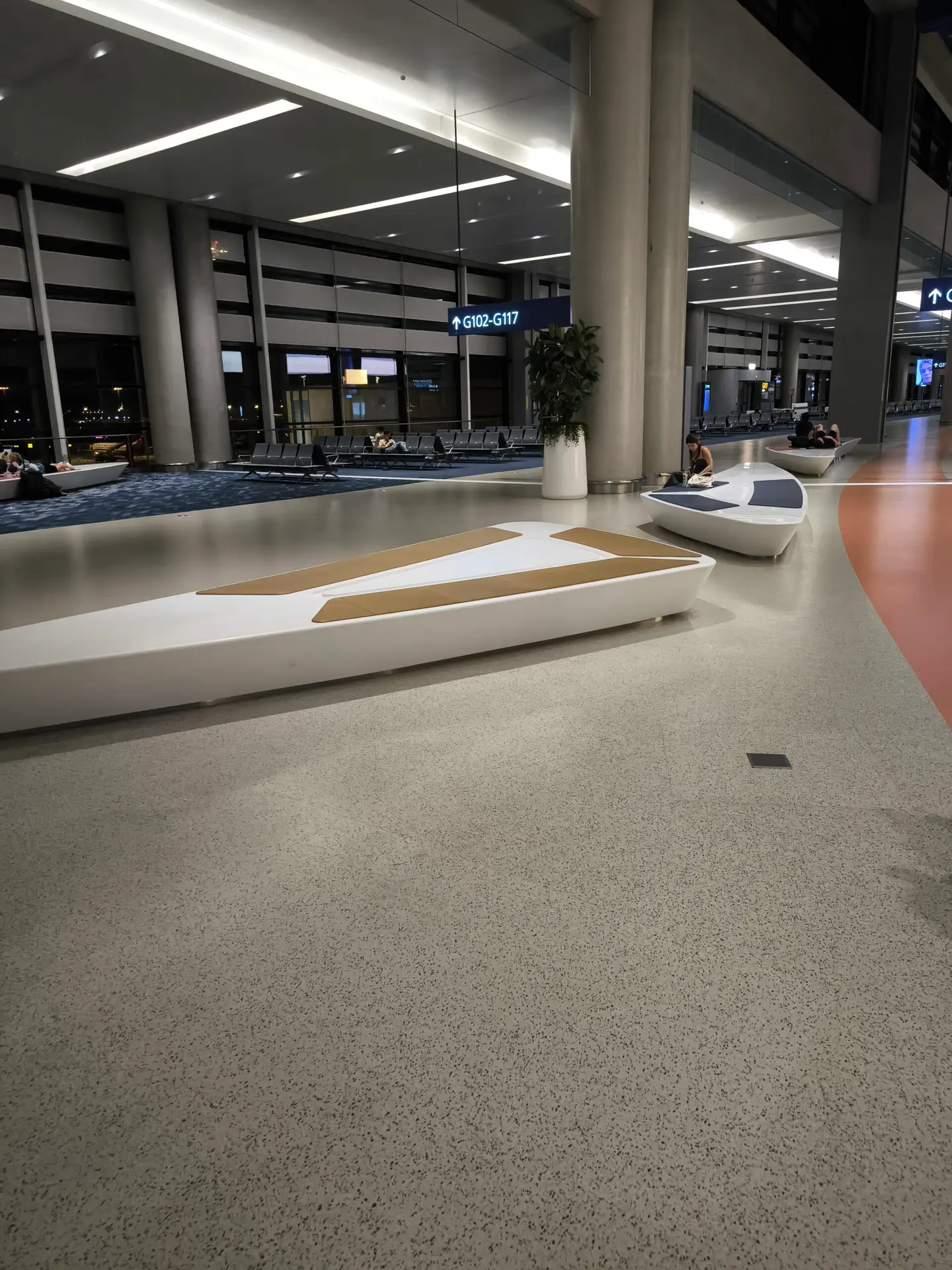
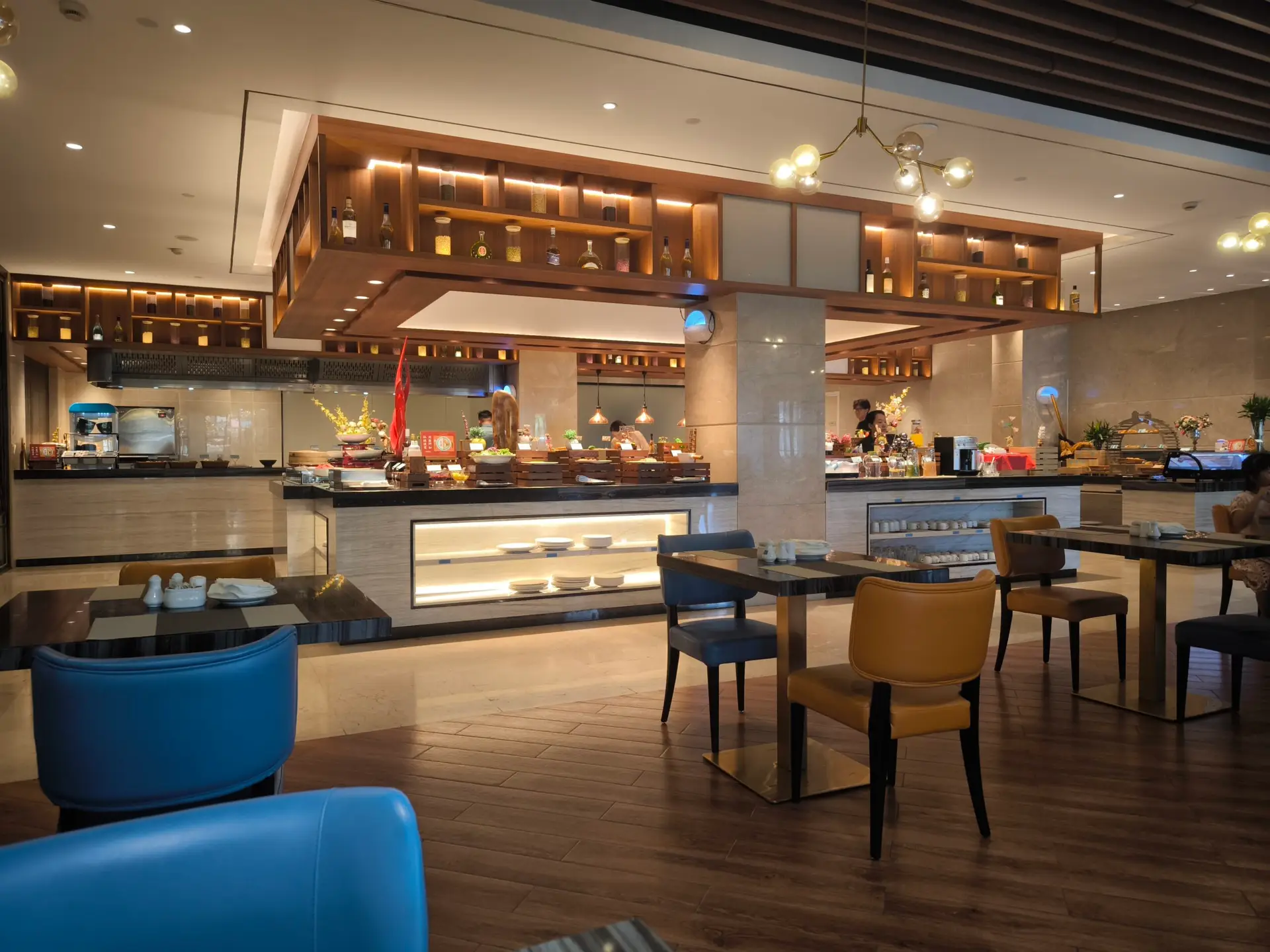
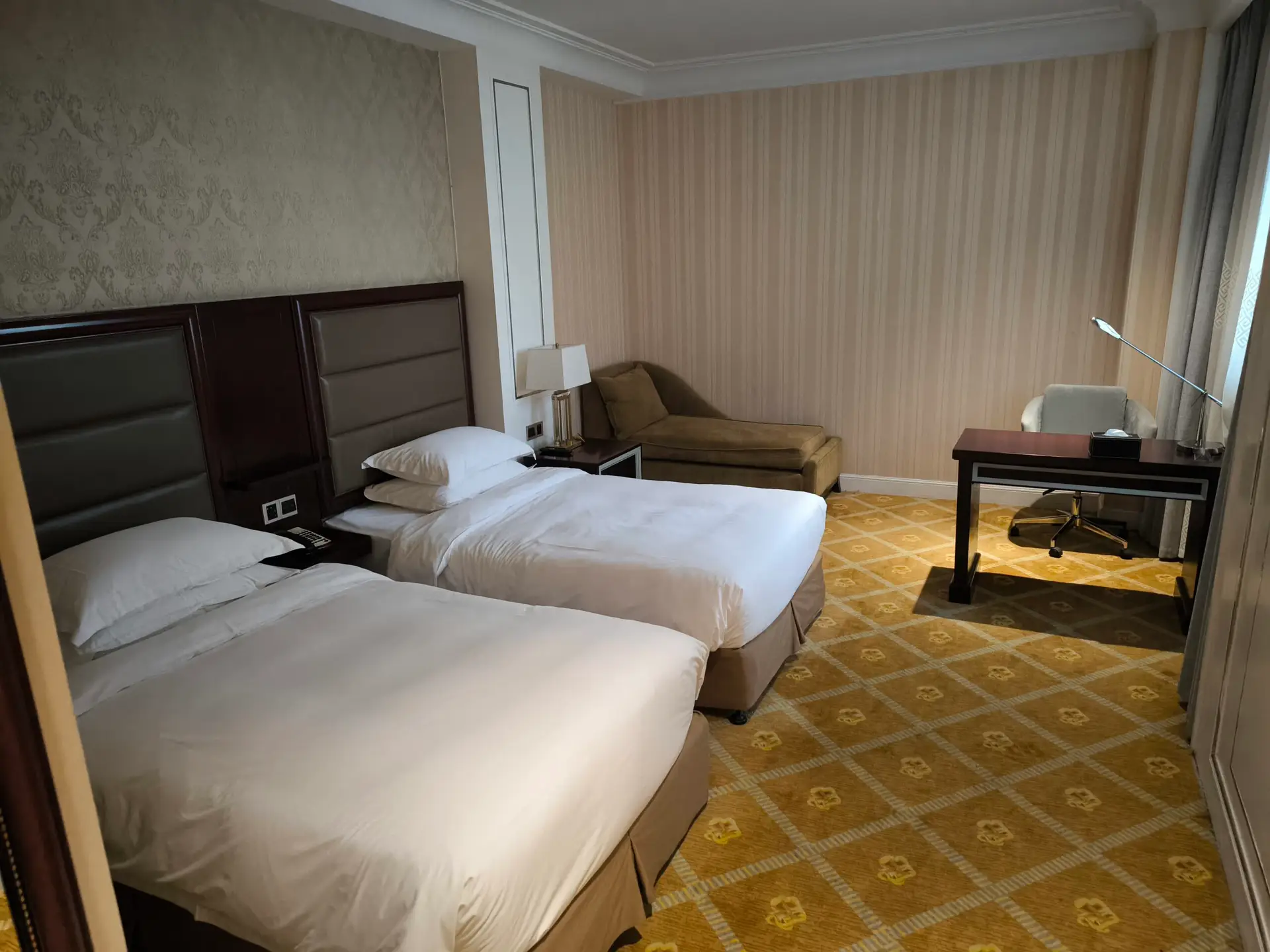
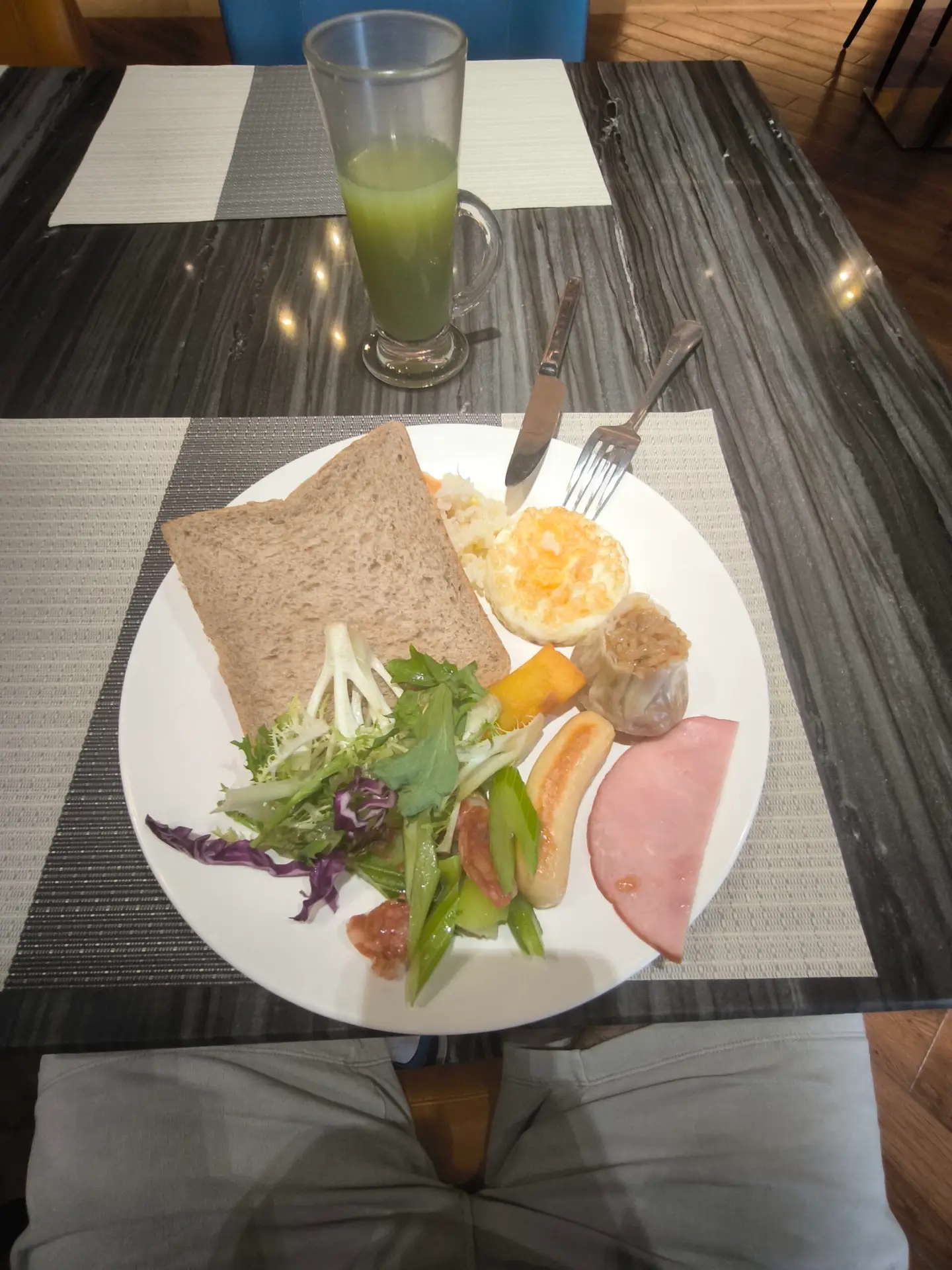
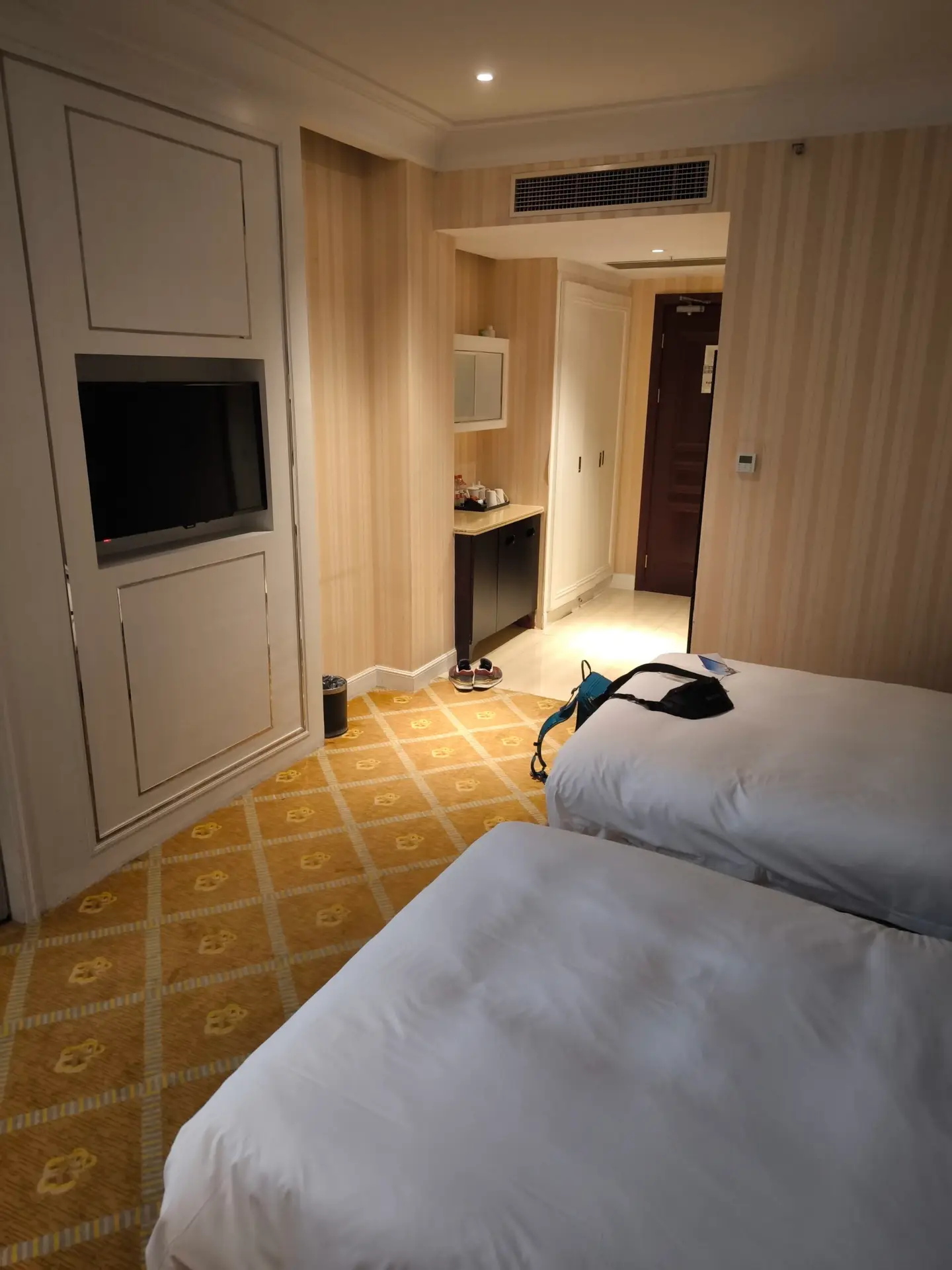
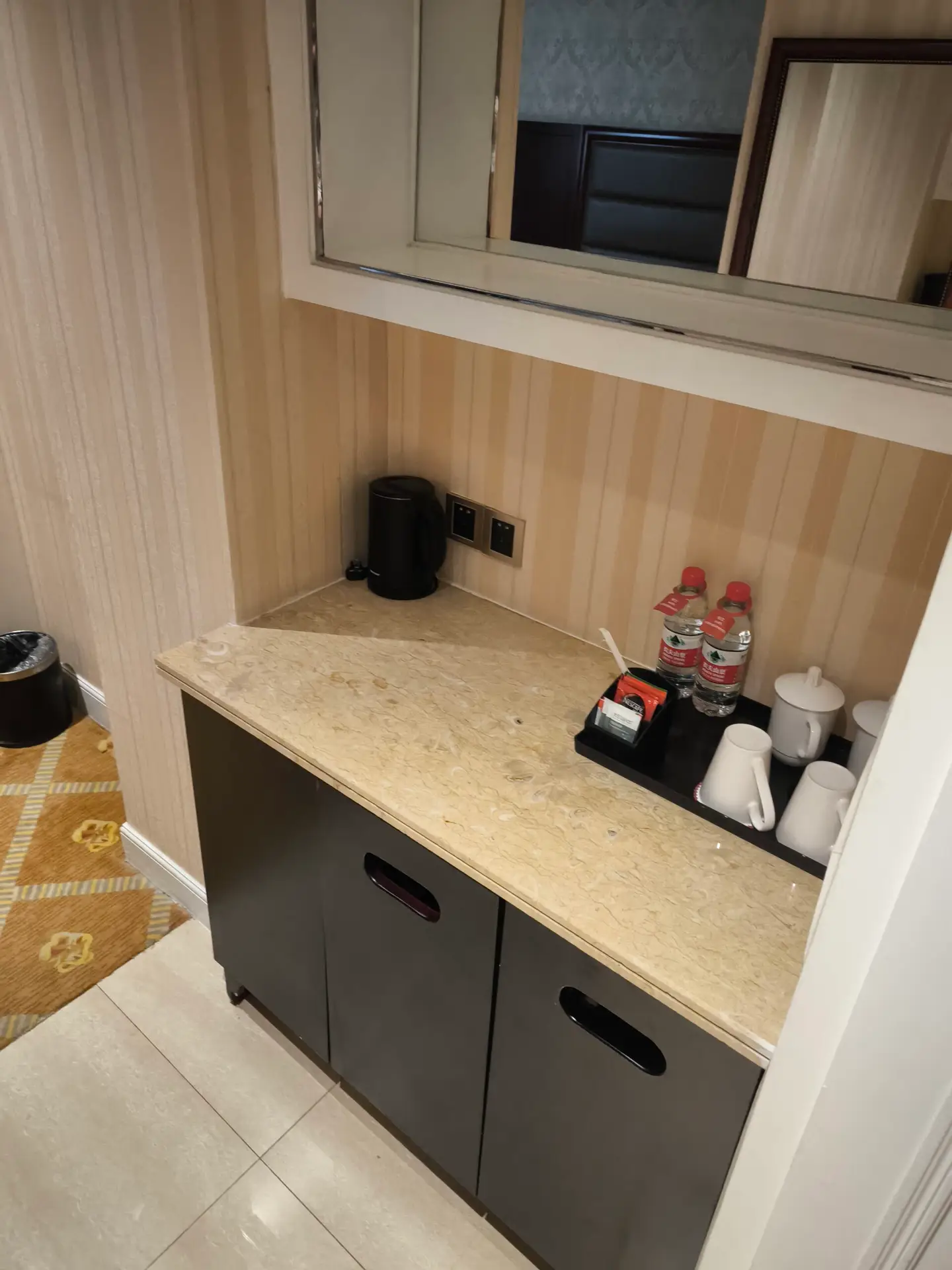
The hotel surcharge for a single room was only 150 yuan… it was quite freezing, just above zero, and the heating in the hotel only turned on once you entered the room.
I actually created a problem for myself when I was returning from New Zealand. Right behind the entrance hall, before check-in, there was a hotel "cat" waiting and giving instructions on where to wait for the transfer, so that was great. But because I was half asleep, I went into the transfer area instead of going through immigration, so I ended up in the departure hall. When I tried to go back, a communication problem arose — either they didn't understand me, or I didn't understand them. The individual staff members are like soldiers — they're not allowed to leave their posts — so they kept sending me from one person to another in circles, and even a translator didn't help. It was absolute hell for two hours. I went through security screening four times before I finally came across a civilian Chinese man who had apparently lived abroad and spoke English better than I do. He understood everything, took me by the hand, explained the situation to everyone, and then clearly told me what to do, so I managed to backtrack to immigration and get outside.
Of course, no one was waiting for me in the hall, but at a regular information desk I explained my problem. They called the hotel, the hotel contacted the "cat," who showed up annoyed that I hadn't been there — but in the end everything was fine. I even made it to breakfast five minutes before it ended.
Each time, I walked around the hotel area to see how people live; I didn't go into the city center. It reminded me of life under a dictatorship, and a lot of memories from that time came back. We should be grateful every day for how we live now.
Everything went perfectly! The flights were great and I'm so grateful you helped me and found the tickets. On the first layover I even made it out into the city — though getting through immigration in China took me about two hours of negotiating with seemingly everyone who worked there — and I took the free tour the airport offers. It was really well organised, so I highly recommend it. Best of all, I didn't have to figure anything out myself; I just hopped on the bus and off we went.
The most complicated part was getting from my hotel in Budapest to the airport — it took three grumpy bus drivers before one finally agreed to take me (yeah… I don't really get it either). And I thought Prague was the embarrassment of Europe without a metro. Flights were on time. The airports were easy to navigate, everything well-signed in English.
In Shanghai, I didn't find my driver — I was probably held up at immigration longer because of all the stamps in my passport. (From a Western point of view, I must have looked like a suspicious traveler.) Instead of heading to the hotel, I took the amazing Maglev train and got a million cameras watching me in the city center…
Back at the airport, exhaustion hit. The Chinese don't pay much attention to each other, so it wasn't weird to stretch out on a Starbucks couch without ordering anything. The seats were comfy — almost like home.
Airline food was surprisingly good. Without moving for so long, you start feeling like a farm chicken being fed nonstop. The flight attendants' English sometimes sounded just like Mandarin — but they were all the more kind and helpful for it.
And finally — arrival in the promised land, New Zealand. I was a bit nervous about biosecurity. They even sprayed the cabin before landing. At the checkpoint, I told them I was carrying just about everything — sharp knives, food, shoes, unmarked pills — and suggested they better check it all. But the officer just smiled and said his job was to take care of dirty shoes. After giving mine a beautiful cleaning, I was free to go. (No insurance checks, no proof of funds, no interviews.)
What would make the journey better? Definitely a longer stopover. Apart from Shanghai being worth more than just a few hours of sightseeing, it's good to partially adjust to the time zones.
I'm traveling with a guy who has no virtual SIM (BNE), no currency exchange (Wise), and no offline maps (Maps.ME)… I can't stress this enough — without those, it's hell, and everyone will try to rip you off. In China, even the Wi-Fi didn't work with a passport login, and for Auckland, I've got internet that's twice as cheap as what 2degrees offered me. And one more tip — next time, I'd bring a half-empty backpack and go shopping in China.
Everything went smoothly. No one was waiting at the airport, but at Exit 4 there's a shuttle marked "Best" that ferries people to the hotel and back (the shuttles wait in front of the hotel), running roughly every 20–30 minutes.
At reception we showed the QR code and got a room key, plus a breakfast pack (much like on the plane — a couple of buns, biscuits and a juice). The hotel has a café and a restaurant, but none of our cards worked there, so if you're hungry it's better to eat at the airport or withdraw cash. Otherwise the room was lovely and well equipped.
Travelers' experiences with the China Eastern lounge in Shanghai
Since I'd already taken this same flight once before — when I booked the transit hotel, had a shower, a nap, and all that — I thought it was great at the time. But now, spending the layover just at the airport, I realized… it was actually kind of nice. I honestly had zero energy for standing in visa lines for hours.
That flight lands super early, around 5 a.m., and there are maybe one or two immigration counters open for about 200 people trying to get out. If you're not one of the first in line, it's a long, tired, bleary-eyed wait. So just wandering the airport, finding a quiet corner to lie down, and not having to deal with anything — it was great.
About three hours before my flight, I decided to try out the lounge. After showing the screenshot, the lady told me that it wasn't the right lounge — that it was the airport lounge, not China Eastern's. She didn't even scan the QR code, just glanced at the Chinese text and sent me away.
I tried again at the airport lounge, got nothing there either. So I went back for round two — and this time, the lady tapped the QR code, and boom — I was in.
Inside, there was a fully stocked buffet, drinks, and even champagne and wine on tap. The food was mainly Chinese, and the vegetarian options were kind of weak, but still, there was enough to eat.
For the showers, there's a separate reception. You give your name, get on a waitlist, and they call you when it's your turn. I didn't have to wait — went straight in. You get a full private bathroom, just like in a hotel, with towels, toothbrush, toothpaste — the works. And you can take your time — there's no time limit.
When I was leaving the lounge, a different lady was at the front desk, and her English was… not great. I tried to ask whether the lounge was only accessible three hours before the flight, or if you could go in anytime. She said I could go anytime, but didn't really understand that I had already been inside, and just wanted some info — so, not super trustworthy on that front.
For me, the lounge was honestly better than the hotel + all the airport bureaucracy, especially if you're not planning to head into the city. You get food, a shower, tea, coffee… or champagne if that's your thing.
You can't pay for it with a card at the lounge desk — I saw someone try. Maybe you can pay cash or book online in advance — just don't count on swiping a card on the spot.
Overall — I'd definitely recommend this option.
Have you had a layover in Shanghai or Beijing? I'd love to hear how it went — feel free to share your experience (even in the comments), or drop any tips or questions below!
Your free Shanghai layover, sorted
Grab the printable checklist for China Eastern's free transit hotel: who's eligible, which apps to set up, what to expect at the airport, and the entry forms to fill in. Straight to your inbox.
You can unsubscribe anytime.

I’m a traveler, anthropologist, and flight specialist who believes that the journey itself is the goal. I hitchhiked across Canada, lived in New Zealand, trekked through the Himalayas, got lost in Arab medinas, and explored dozens of other corners of the world. But what I love most are the hidden Greek tavernas where time seems to stand still. I cherish the stories of the people I meet on the road and look for beauty in those moments when the world fully opens up. Here, I share those journeys – both big and small – with you. And I also add tips on how to travel smart, sustainably, and with heart – from cheap flights to hidden places you won’t find in guidebooks.




8 thoughts on “The Ultimate Guide to Booking a Free Transit Hotel in China with China Eastern Airlines”
hey , i have the same flight, budapest-shanghai – new zeeland but I just can’t book the transit hotel, which flight number did you use since there’s 2 flights?
Hi Jinar, for the booking I enter the flight details from Shanghai (the onward flight). That works for me.
Hi Simona,
Thank you for the detailed description of the booking process.
Unfortunatly I am not able to make an account airline, so can;t start the booking process. Can you inform me how you made the account?
Hi Laura, could you tell me exactly what problem you’re having when trying to create the airline account? For example – does the website show an error message, or are you unable to find the registration form? Once I know the details, I might help more.
Hi Simona,
I was able to create an account online, however there is not registration form. Also i downloaded the app, it’s in English but doesn’t show any option to book hotel.
Thanks.
Hi Abhi, you’re almost there!
The hotel booking option only appears in the Chinese version of the China Eastern app, not the English one. Switch the app’s language to Chinese (and Google Translate the screen to read along), and the “book transit hotel” option shows up.
I go through every screen step by step in the video in this post (the “How to book the hotel” section), so it’s easiest to follow along there. At the very end you’ll get a QR code—screenshot it and save it; that’s what the hotel scans at check-in.
If a particular screen still won’t cooperate, tell me which step, and I’ll help you through it. Thanks for reading, and safe travels!
Hi Simona! Thanks for your detailed post. Can you provide step-by-step details on how to secure the booking of the transit hotel via the app? If u have screenshots on what’s the page supposed to look that, that’ll be perfect! Thanks! I’m trying to book it for my dad but I can’t seem to get the app to work after downloading.
Hi Carrie,
The full step-by-step is exactly what I walk through in the video in this post (in the “How to book the hotel” section)—every screen in the app is in there.
One thing that trips almost everyone up: the transit-hotel booking only appears in the Chinese version of the China Eastern app, not the English one. So if it seems like the app “isn’t working” after downloading, switch the language to Chinese. Right at the end you’ll get a QR code—screenshot it and save it; that’s what the hotel scans at check-in.