Heroes of the Orient reminds us that the world's story was never told from one direction.
Book Review & Translation
Heroes of the Orient
By Lenka Hrabalová
Translated from the Czech by Simona Cibulková
Original edition: Tarbik Press, 155 pages
There is a minaret in the Czech countryside. It has nothing to do with Islam; a Moravian nobleman built it in the nineteenth century because he thought it looked beautiful. I first saw it as a child and couldn't work it out: what was this strange tower doing among the Bohemian fields?
Years later, having spent time in places where minarets are as common as church steeples (in Morocco, in Turkey, in the mudbrick towns of Central Asia), I drove past it again and understood. It was a question disguised as architecture: What else is out there? Lenka Hrabalová's Heroes of the Orient asks the same question, and asks it of children.
Why Heroes of the Orient is written for everyone
The book is a collection of eighteen biographical stories drawn from the Islamic and Arabic world, covering some 1,500 years, from the pre-Islamic love of Majnun and Layla to the nineteenth-century Algerian resistance leader Abdelkader. It is written for children, though "for children" here means for anyone who has somehow reached adulthood without knowing that the oldest university in the world was founded by a woman called Fatima al-Fihri, or that Saladin sent Richard the Lionheart a fresh horse in the middle of a battle so the English king wouldn't have to fight on foot.
Hrabalová is a Czech Arabist and Iranist. She has spent years working, travelling, and guiding tours across the Middle East and North Africa, and holds a doctorate from Palacký University in Olomouc. Her earlier books — Saharan Stories, Mosaic of Iran — earned her the Egon Erwin Kisch Award, the Czech prize for literary non-fiction. She is not a populariser dabbling in exotica but a scholar who has simply chosen warmth over footnotes.
The structure is episodic. Each chapter centres on a single figure—Bilal, the first muezzin; Harun al-Rashid, the caliph who roamed Baghdad in disguise; Ferdowsi, the poet who spent thirty years writing the Shahnameh and never received his pay. Each story is followed by sidebars: "A Closer Look" sections that sketch in geographical or cultural context. The format has a textbook's bones, but Hrabalová fleshes it out with a storyteller's instinct.
The geographical range is impressive. Hrabalová moves from the Arabian Peninsula to Persia, from al-Andalus to the Sahel, from Baghdad to Istanbul to Damascus. The book's subtitle (Heroes of the Crescent) nods to the Islamic crescent, but the cast is not exclusively Muslim. Hasdai, the rabbi's son from Jaén who becomes the physician and diplomat of Córdoba, is Jewish. The Crusader Richard appears not as a villain but as a man of honour trapped in the machinery of holy war. The point, gently made, is that civilisation in the Middle East and North Africa was a collective achievement (Muslim, Jewish, Christian, Zoroastrian, pagan) and that to strip any thread from the carpet is to misunderstand the pattern.
There are, inevitably, some wobbles. A book that covers fifteen centuries across three continents in 155 pages is bound to simplify, but in my opinion, a simplification in the service of young readers is not a sin.
Heroes, not monuments
What the book does extraordinarily well is to present its subjects as human beings rather than monuments. Ferdowsi is not just the author of the Shahnameh but a broke and frightened old man fleeing a king's wrath. Avicenna is not just the father of medicine but a workaholic who kept himself awake with wine and experimented on his own body until it gave out. Abdelkader was no mere freedom fighter but a man who, in exile, rode unarmed into the streets of Damascus to shield Christians from a massacre, and was later honoured by both France and Abraham Lincoln. These are people whose contradictions make them interesting, and Hrabalová has the good sense to leave those contradictions visible.
A translator's vertigo
I came to this book as its English translator. That is an odd place from which to write a review. Translation is an intimate act; you spend weeks inside another person's sentences, learning the rhythm of their thought, and when you emerge, you know the book the way a musician knows a score — from the inside. The Czech original carries an easy, conversational authority that I hope has survived the crossing into English. Hrabalová writes the way a good guide talks — unhurried, full of asides, alert to the moment when a listener's eyes light up.
I was in Crete when I worked on the chapter about Ibn Battuta, the great Moroccan traveller who covered more ground in the fourteenth century than most of us will manage with budget airlines. Sitting on a terrace above the Libyan Sea, translating a passage about a man who had crossed this same water seven hundred years ago, I felt something I hadn't expected: the vertigo of connection. It is the same vertigo one gets standing in the Alhambra, or hearing the call to prayer drift over the rooftops in Fez, or noticing, in a museum in Vienna, that the tulips on a Habsburg vase are the same ones that grew in Ottoman gardens. Many things, if you look at them long enough, lead somewhere else.
That is, finally, the gift of this book. It does not argue for tolerance — a word that implies one is merely putting up with something. It argues for curiosity, which is richer, more demanding, and far more durable. In a time when children are algorithmically funnelled into ever-narrower channels of interest, a book that says, in effect, "Here is a world you didn't know existed, and it has been here all along", that is not a small thing. The minaret in the Czech countryside is still standing. And somewhere, a child driving past it is pressing her or his face to the window, asking what it is.
Heroes of the Orient is published in Czech as Hrdinové Orientu by Tarbik Press. For more of my writing, visit Journey Matters.
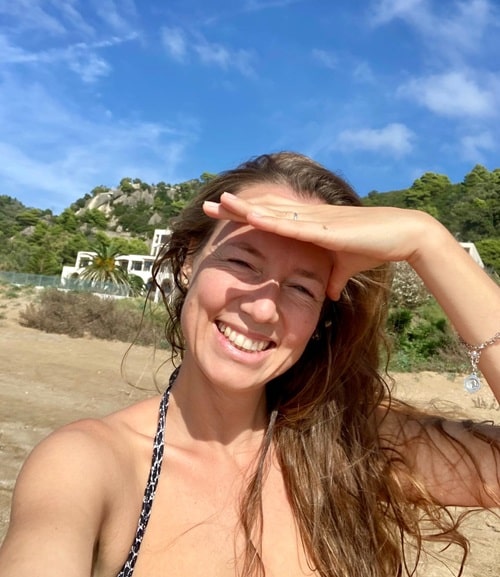
I’m a traveler, anthropologist, and flight specialist who believes that the journey itself is the goal. I hitchhiked across Canada, lived in New Zealand, trekked through the Himalayas, got lost in Arab medinas, and explored dozens of other corners of the world. But what I love most are the hidden Greek tavernas where time seems to stand still. I cherish the stories of the people I meet on the road and look for beauty in those moments when the world fully opens up. Here, I share those journeys – both big and small – with you. And I also add tips on how to travel smart, sustainably, and with heart – from cheap flights to hidden places you won’t find in guidebooks.